Once Upon a Time
‘Once upon a time, words began to vanish from the language of children’.1 So begins the fairy-tale preface to The Lost Words, written by Robert Macfarlane and illustrated by Jackie Morris. The preface alludes to the 2007 edition of the Oxford Junior Dictionary, which had culled ‘outdoor and natural’ words deemed irrelevant to modern-day childhood—words like acorn, adder, bluebell, conker, dandelion, fern, heather, heron, ivy, kingfisher, lark, newt, otter, and willow—and replaced them with ‘indoor and virtual’ words like blog, bullet-point, chatroom, and voice-mail.2 The Lost Words is Macfarlane and Morris’ creative protest, which endeavors to re-enchant us into the worlds of the ‘lost’ creatures to which these words refer.
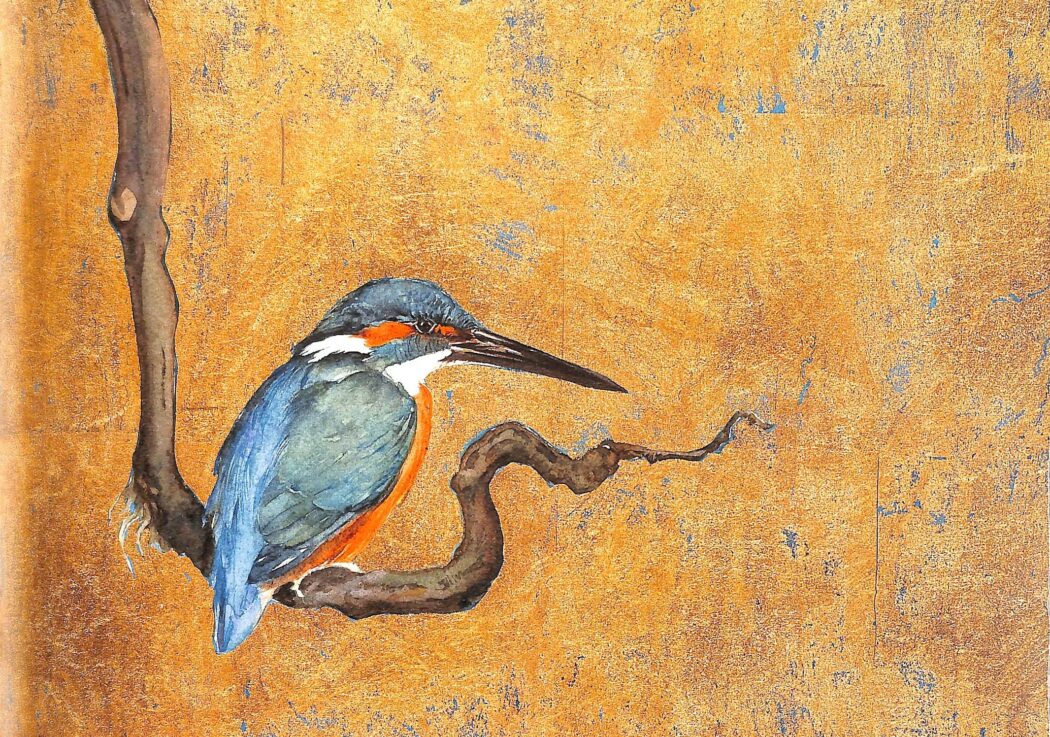
This essay considers how Morris endeavors to re-enchant us by rendering each lost creature in the recognisable form of an icon. By invoking the tradition of Christian iconography, Morris playfully explores theologically inflected dynamics of absence and presence, inviting us into a reverent, participatory engagement with the natural world.
-
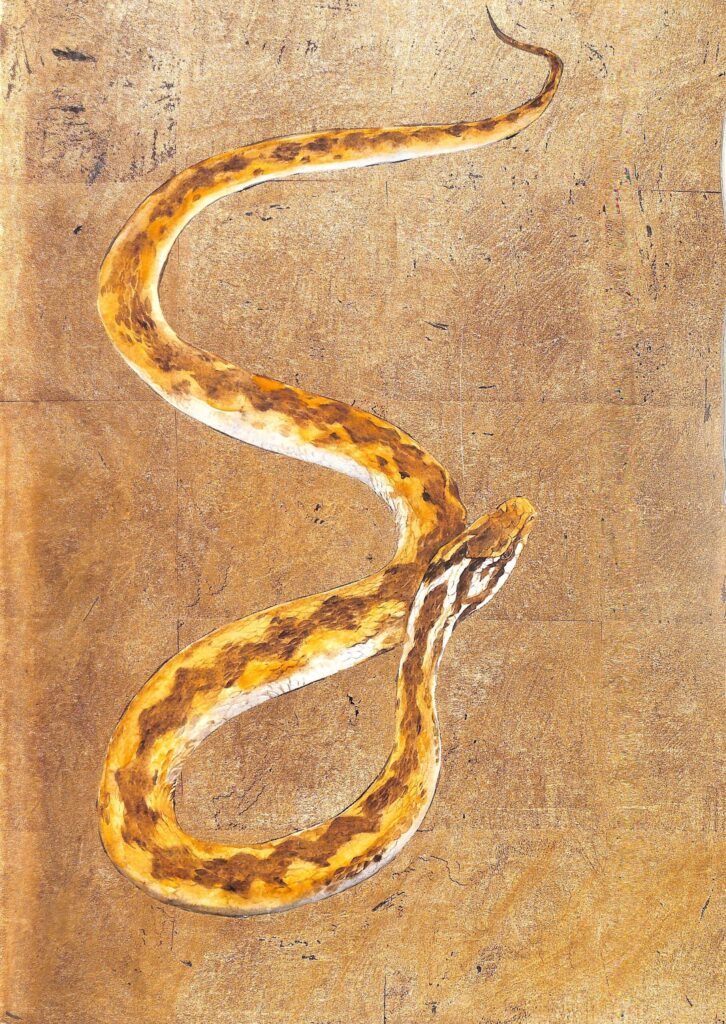
- ‘Adder’
-
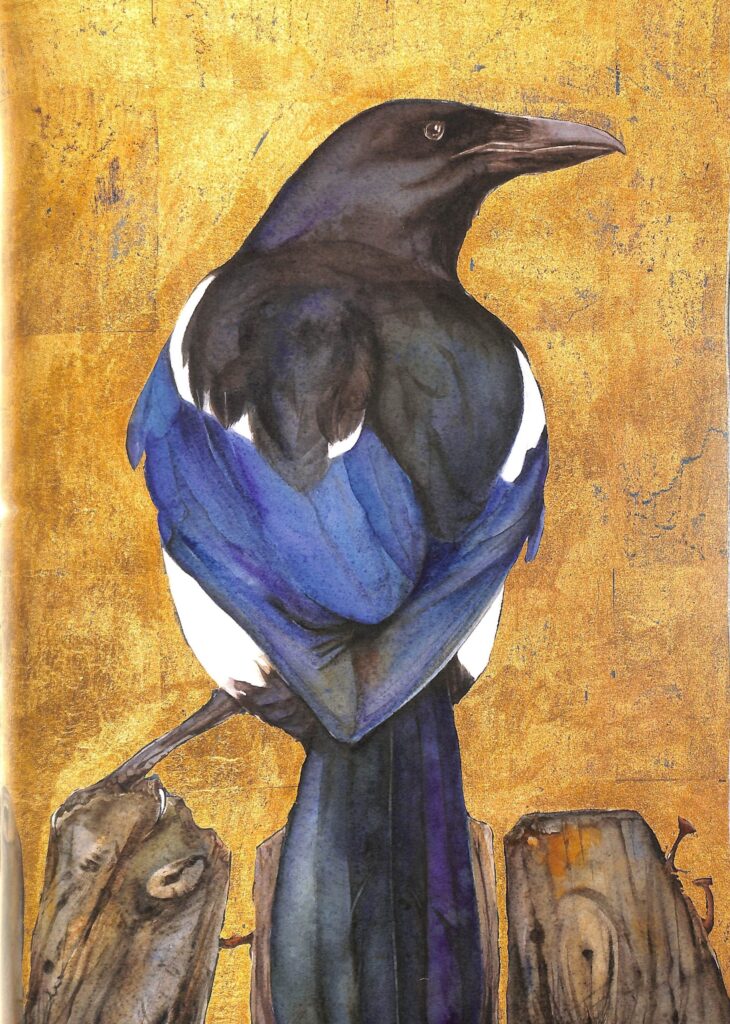
- ‘Magpie’
-
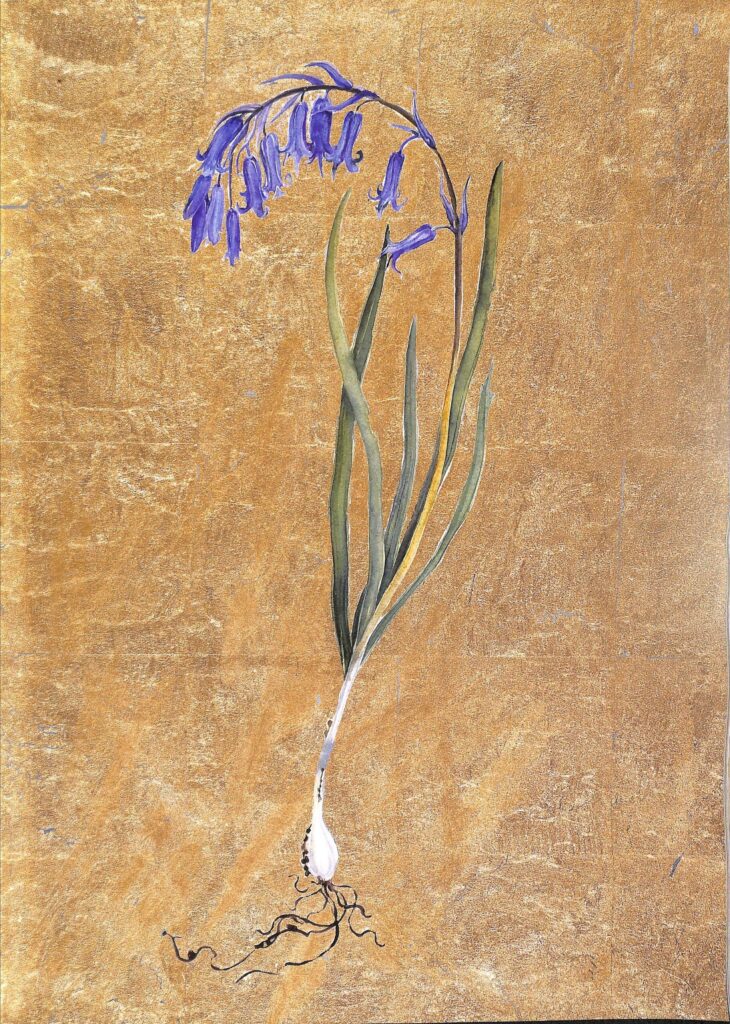
- ‘Bluebell’
Re-Enchantment
The Lost Words aims for re-enchantment. It opens with ‘Once upon a time…’ and declares itself to be a ‘spellbook’, summoning children and adults alike with its playful and inviting tone.3 Its large scale—standing a foot-and-a-half tall—invites us to enter in, to immerse ourselves in a world of wonders.
The Lost Words defies classification into any one genre. It is ‘a proper grimoire’, a ‘spellbook’, a collection of poems and illustrations which invite the reader to ‘conjure back’ lost creatures.4 It is ‘a “spelling” book in more ways than one’, Morris quips, with alphabetically-arranged acrostic poems that play with alliteration and rhyme.5 It is an illuminated manuscript, whose tale is ‘told in gold’—‘the gold of the goldfinches that flit through its pages in charms’.6 It is a modern-day bestiary without explicit religious reference.7 It is a book of painted icons of priestly and kingly creatures.8 In The Lost Words, Macfarlane and Morris employ these various genre as ‘estranging techniques’, which, in Alison Milbank’s words, awaken in us ‘a new sensitivity to the splendour and strangeness of the world … a religious sense of the mystery of the real’.9
Pattern
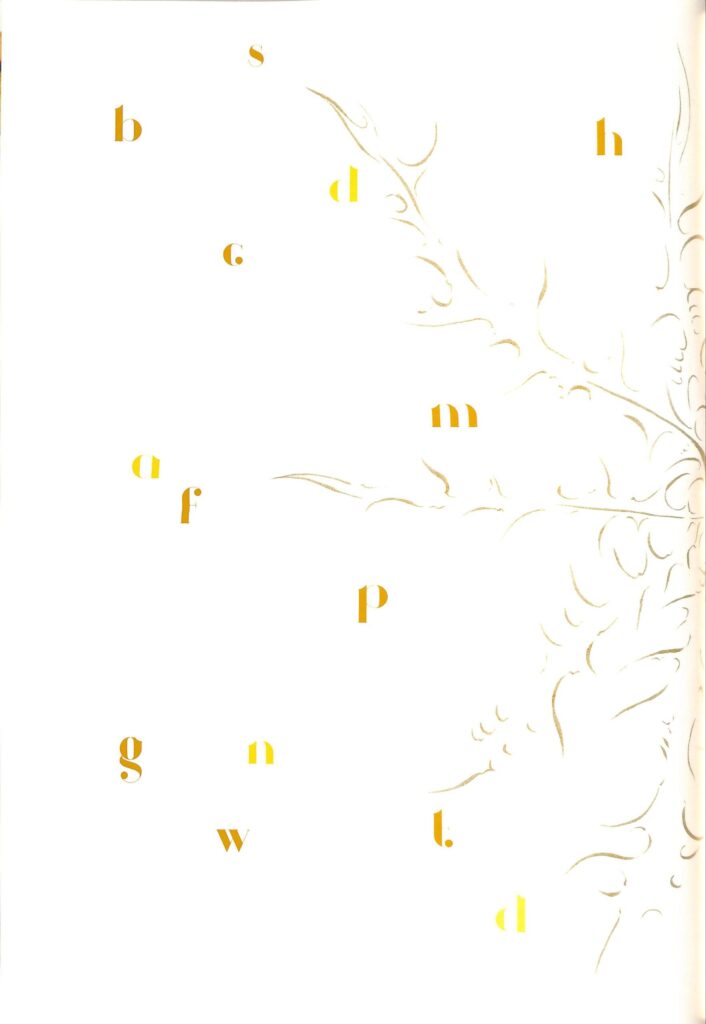
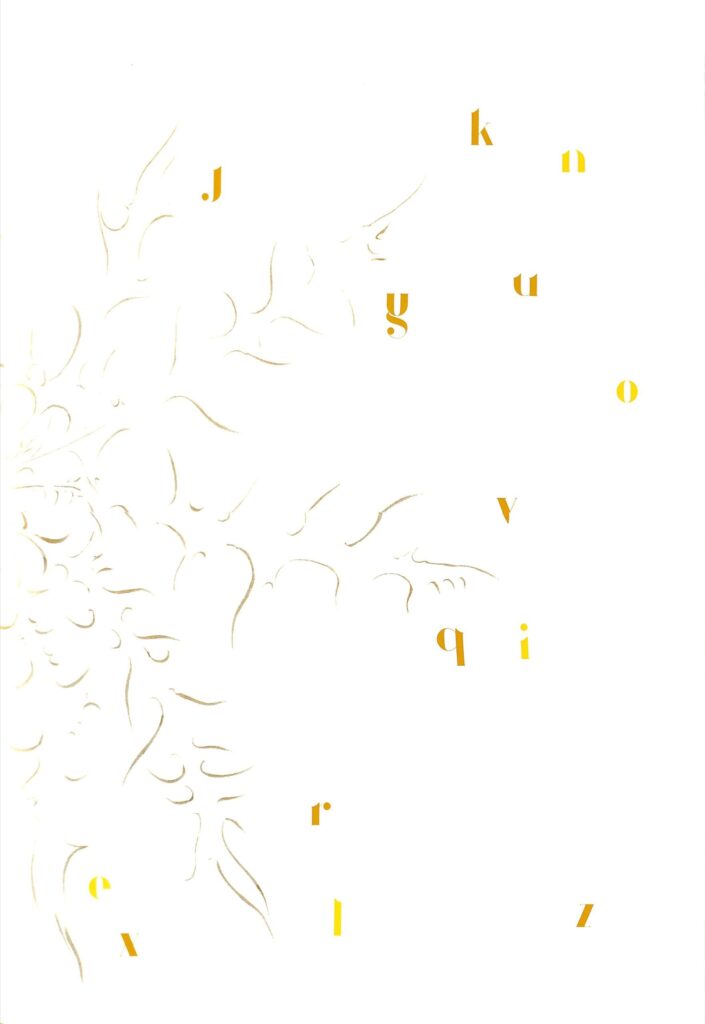
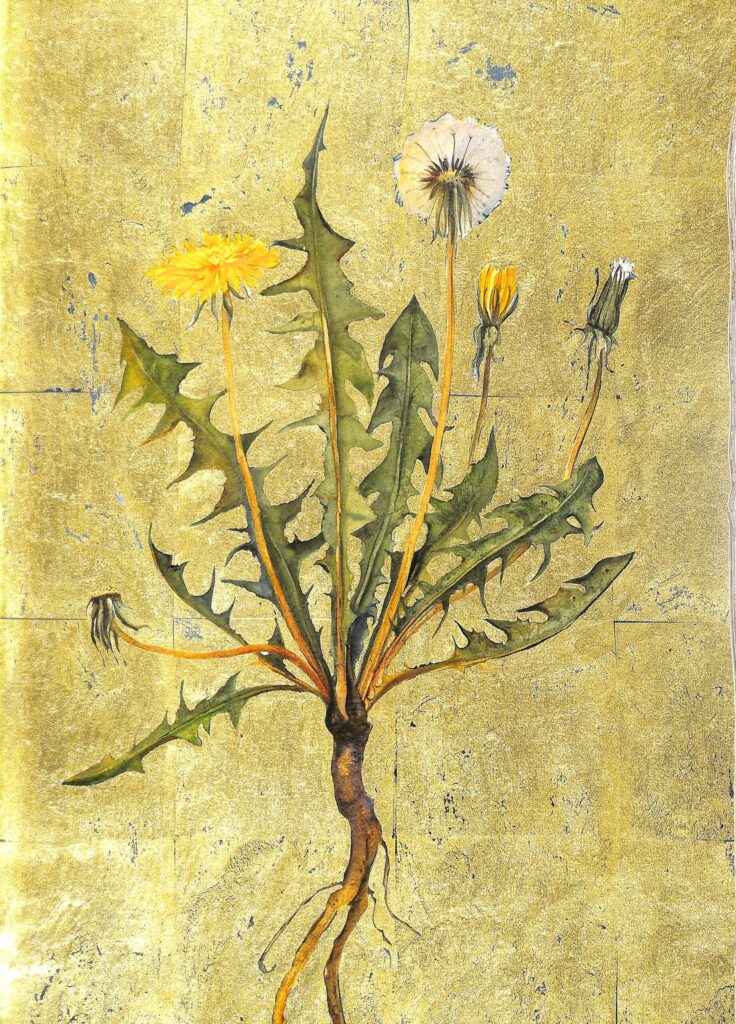
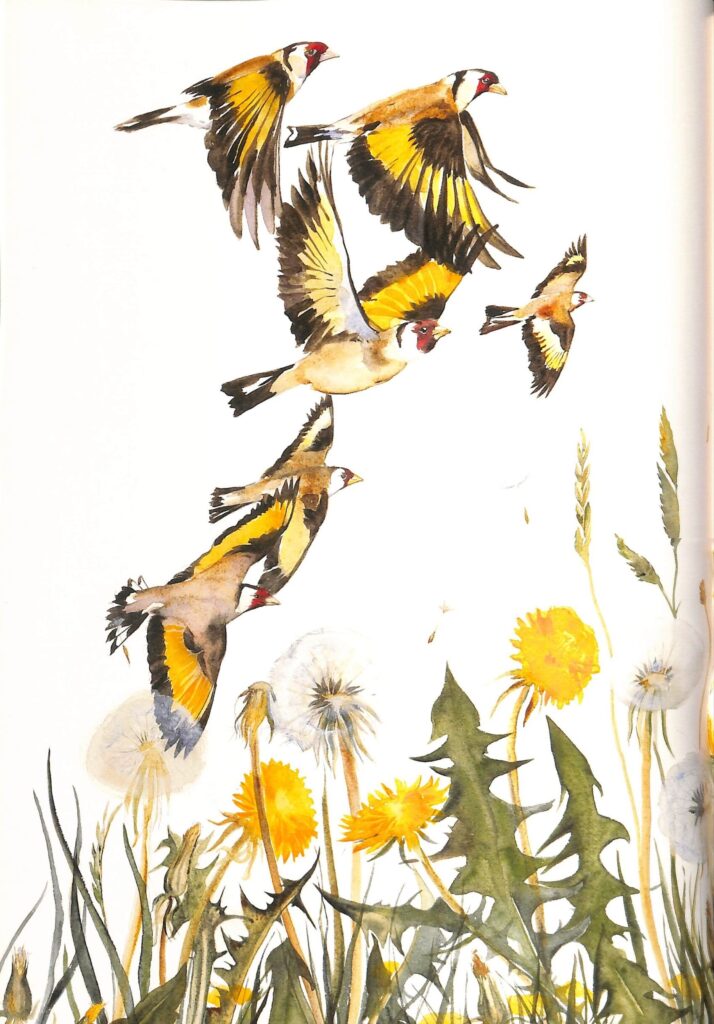
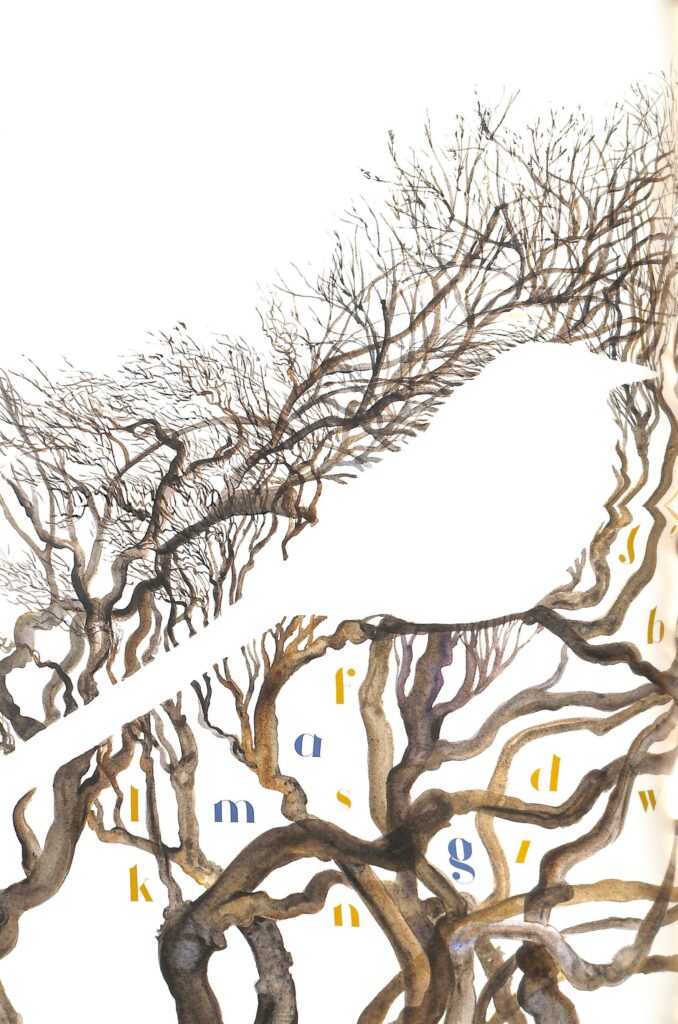
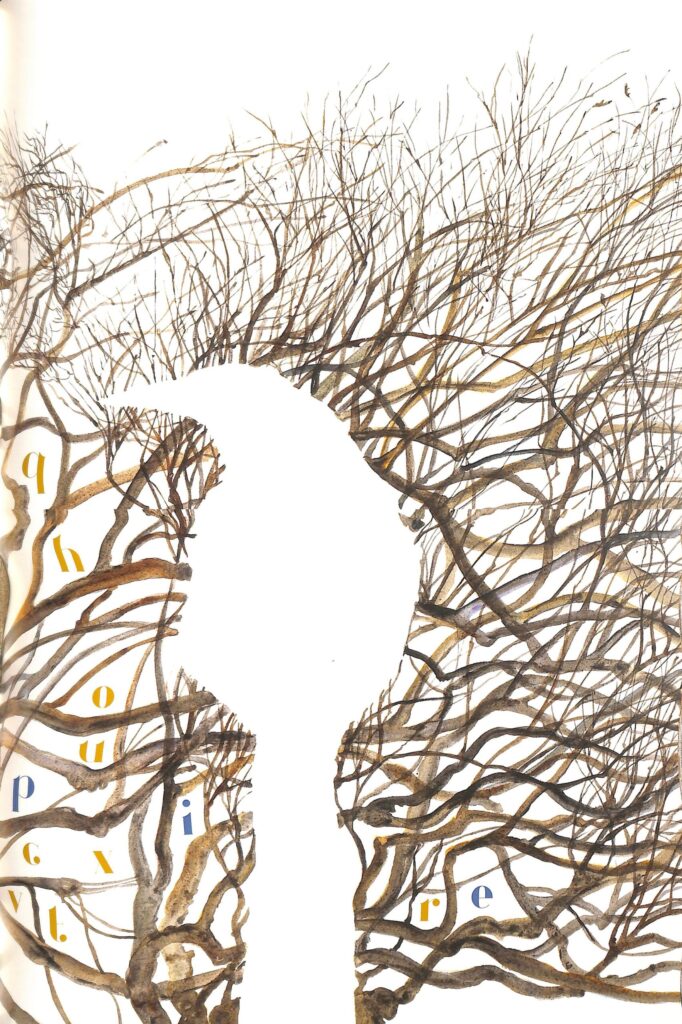
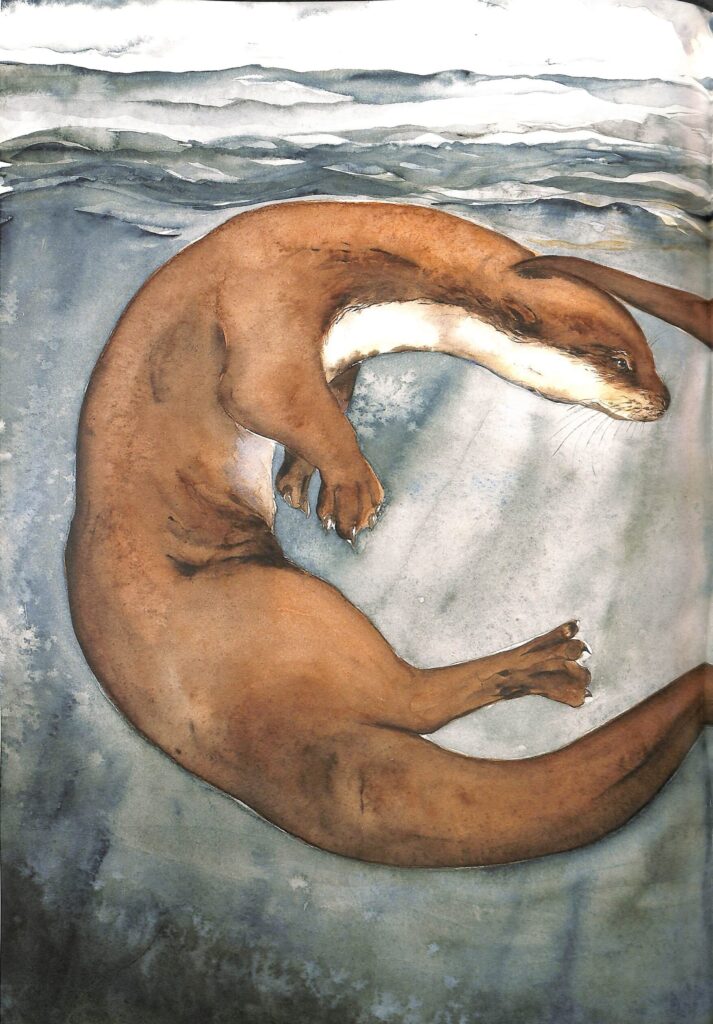
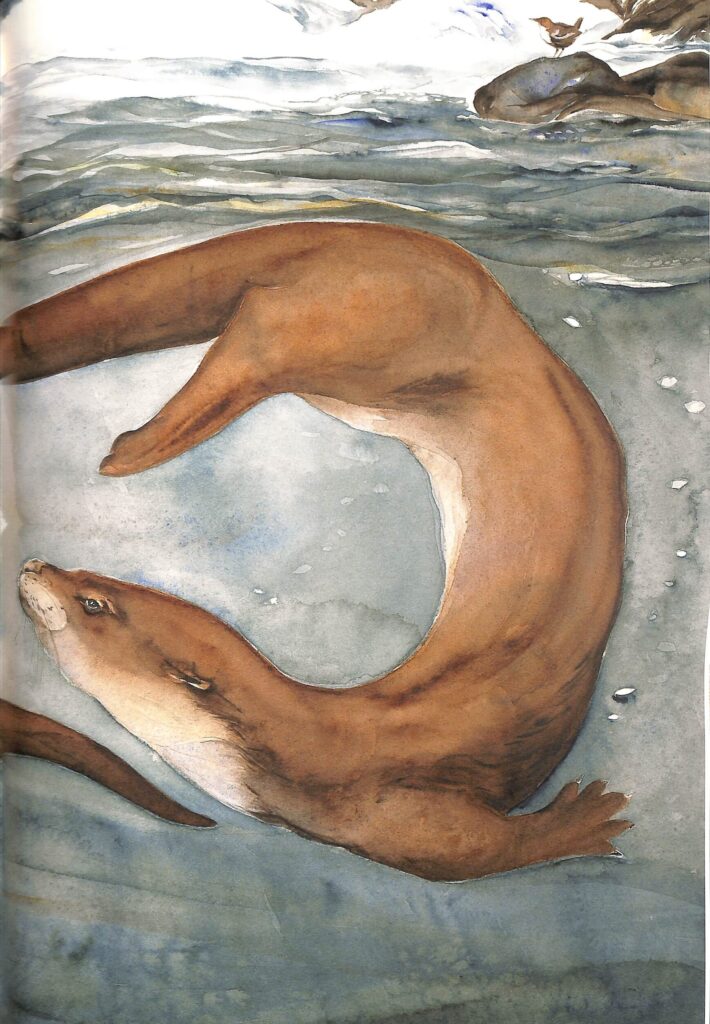
As we turn the pages of The Lost Words, we notice a distinct pattern by which we ‘conjure back’ each creature. First, we encounter a double-page spread that is mostly negative space, with scattered letters and a sparse natural motif. Macfarlane calls this the ‘“absence” page’, in which Morris suggestively depicts the absence of the yet-to-be-named creature.10 The strewn-about letters on this page anticipate the naming of the creature: the letters which comprise the creature’s name are coloured differently than the gold letters with which they are scattered. Second, we encounter a ‘spell’, Macfarlane’s acrostic poem of the creature’s name, set beside Morris’ vividly painted icon of the creature itself.11 Third, we encounter a double-page spread in which Morris depicts the creature in its natural habitat, amongst other creatures.
‘Dandelion’, 1 of 3

‘Dandelion’, 2 of 3
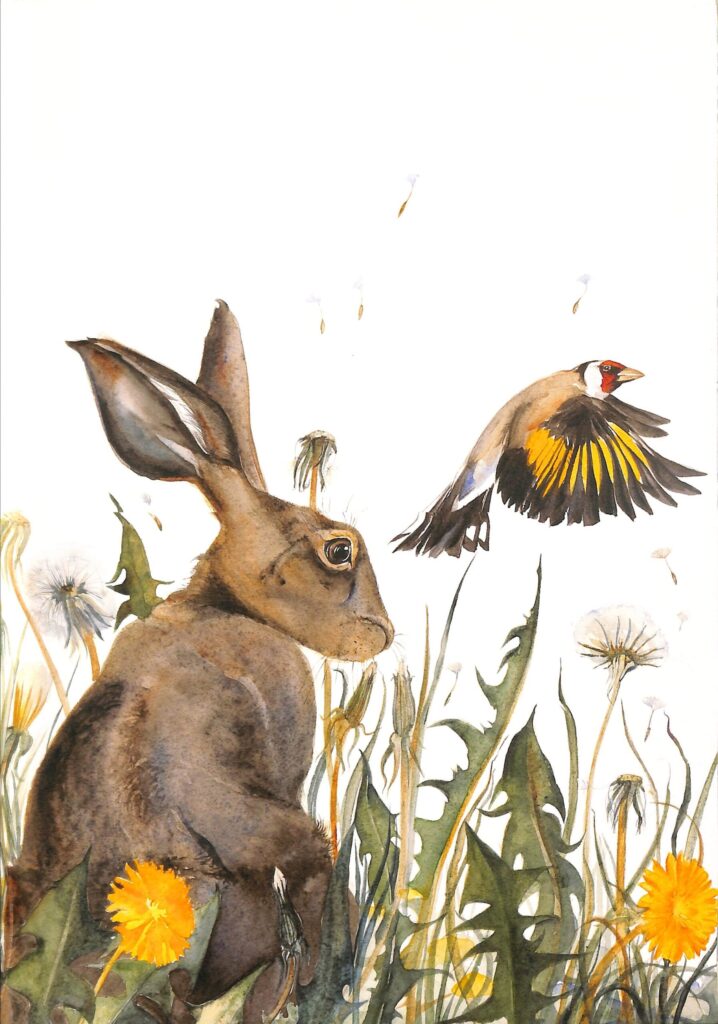
‘Dandelion’, 3 of 3
Icons of Lost Creatures
This essay focuses on the style of the illustration which accompanies each acrostic ‘spell’: Morris depicts each creature in the recognisable form of an icon—painted in vivid colour, set against a background of gold (or green, or grey) leaf.
-
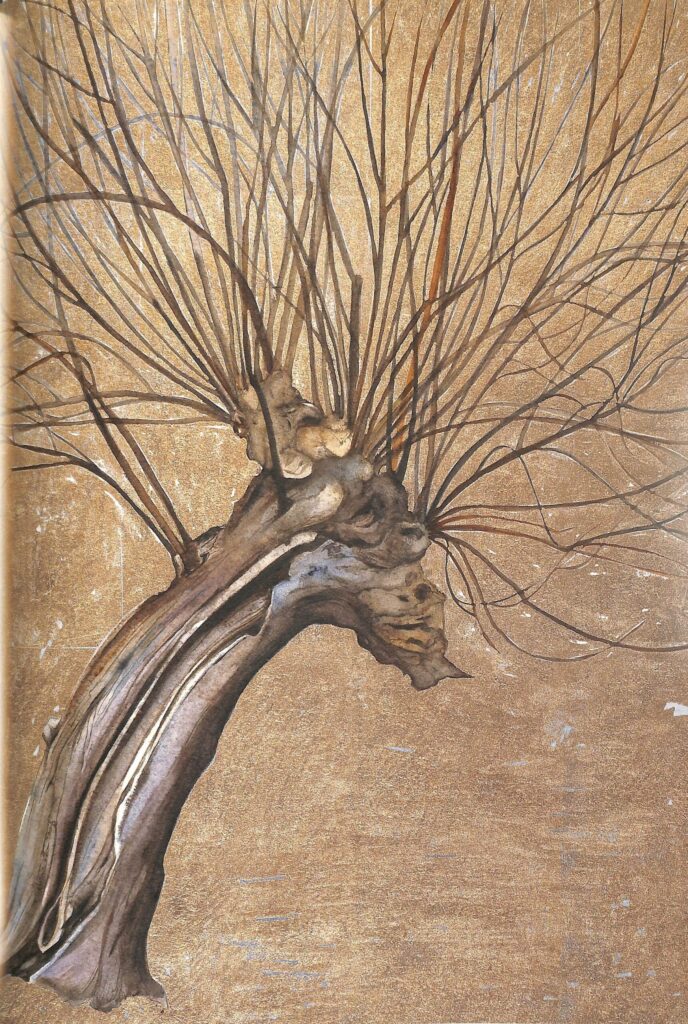
- ‘Willow’
-
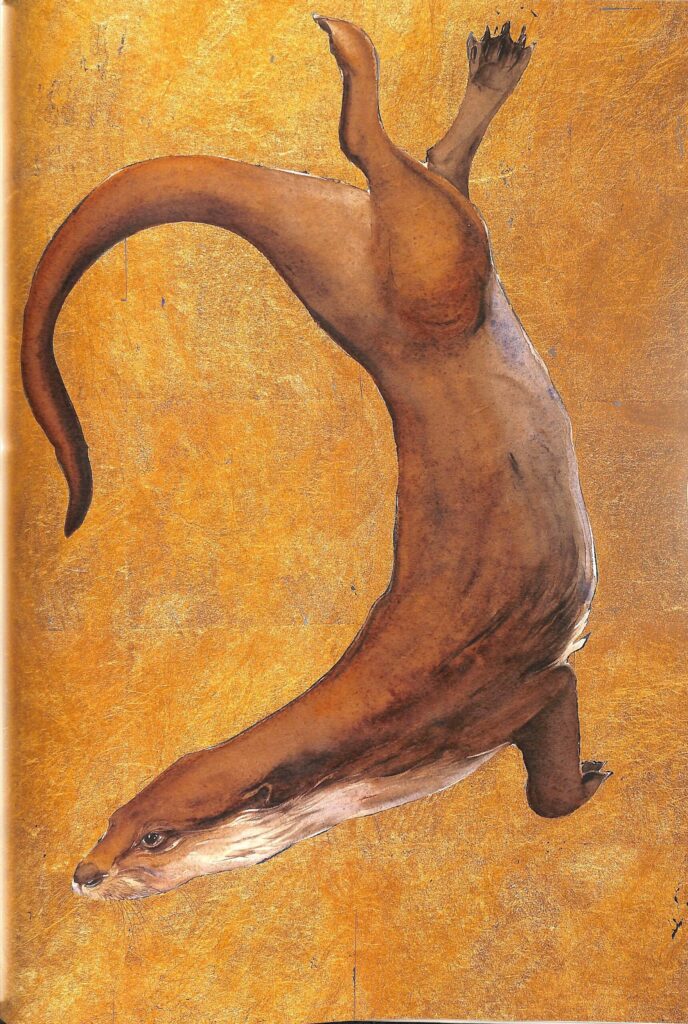
- ‘Otter’
-
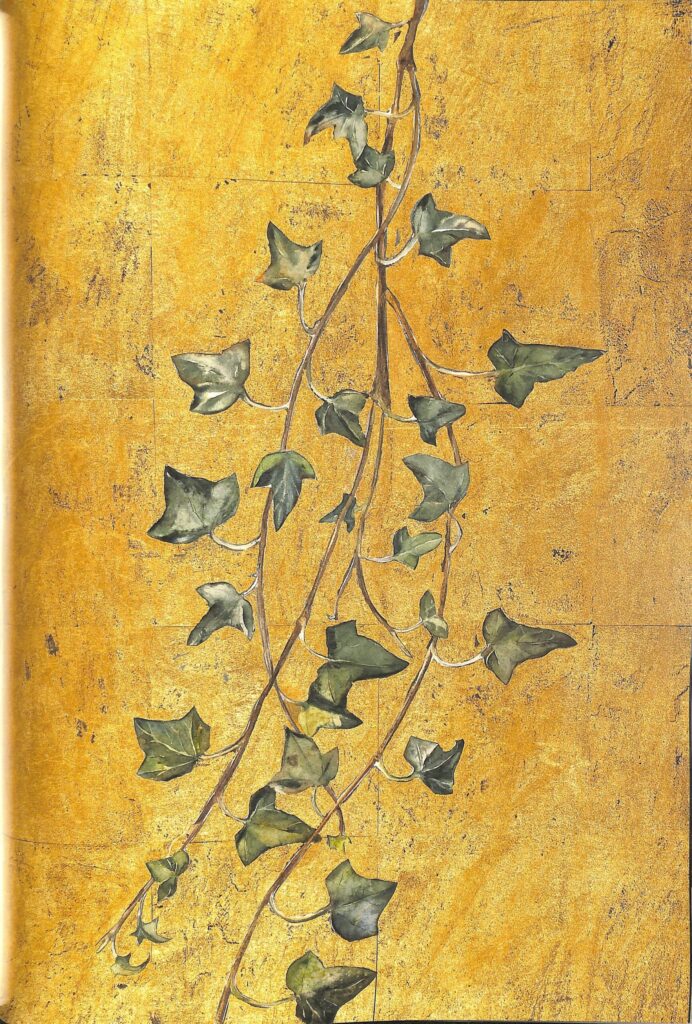
- ‘Ivy’
Theological Critique and Beyond
Now, if one were offering a thorough theological critique of Morris’ iconographic illustrations in The Lost Words, one might raise significant questions about ‘icons’ of non-human creatures. Indeed, the traditional defence of icons appeals to a particular theological anthropology—an understanding of what it means to be human, made in the image of God. In defending icons of Christ, Saint John of Damascus appeals to the Incarnation—the invisible made visible, the hypostatic union of the divine and human natures of the Word made flesh.12 Natalie Carnes argues that Christ’s ‘dual nature’ as ‘human-divine’ is reflected in humanity’s dual nature as ‘animal-spirit’, and that this ‘amphibiousness’ justifies iconography of both Christ and the saints.13 Moreover, Carnes echoes John of Damascus’ defence of icons of the saints in her appeal to the saints’ union with Christ and participation in Christ—the Orthodox doctrine of theosis, or deification.14 The traditional defence of icons appeals to a robust theological anthropology to justify icons of Christ and of the saints—leaving little room, if any, for icons of non-human animals, much less of plants or other forms of matter.
While one could expand this theological critique of ‘icons’ of non-human creatures, this essay explores why Morris borrows of the iconographic style—that is, in what this particularly Christian style of illustration allows Morris to suggest and invite. By invoking the tradition of Christian iconography, Macfarlane and Morris playfully explore theologically inflected dynamics of absence and presence, inviting us into participatory engagement with the natural world which does not claim mastery, but marvels at mystery.
Absence and Presence
According to Carnes, icons ‘mediate presence-in-absence’.15 That is, icons are understood to convey the presence of the one who is visually represented—in this case, each lost creature. As noted above, Macfarlane explicitly refers to the double-page spread which precedes the acrostic poem and icon illustration of each creature as the ‘“absence” page’, in which Morris suggestively depicts the absence of the yet-to-be-named creature. Absence is, of course, a key concern of The Lost Words: the loss of these ‘nature words’ portends the loss of entire species in the natural world. In speaking the creature’s name, we summon its presence, here made visible in the form of an icon.
‘Magpie’
Participatory Engagement
Moreover, as we speak these creaturely names and thereby summon the creatures’ presence, we are no longer detached observers; we become active participants in the work of re-enchantment.16 The acrostic ‘spells’ and accompanying ‘icons’ function as ‘portals’, which open for us imaginative ‘adventures into the mysterious worlds of different creatures, even different kinds of matter’.17 We ascend into the heavens with Lark, who flies ever higher ‘into deep space, past dying stars and / exploding suns’, where we hear her ‘sing [her] heart out at all dark matter’.18 We follow ‘shape-shifter’ Otter to the riverbank, where we are invited to slip off our skin and change our matter, to pour our outer being into Otter.19
‘Otter’
Furthermore, The Lost Words aims to compel our participation not only in the work of re-enchantment but also in the work of creation-care. This call to orthopraxy in creation-care is, indeed, a central concern for Macfarlane and Morris.20 The postscript to The Lost Words declares that ‘a portion of the royalties from each copy of The Lost Words will be donated to Action for Conservation, a charity dedicated to inspiring young people to take action for the natural world, and to the next generation of conservationists’.21 In fact, the publication of The Lost Words inspired not only a campaign for Oxford University Press to reinstate the culled nature words, but also educational and practical conservation efforts.22
Reverence
Through The Lost Words, Macfarlane and Morris suggest that this work of creation-care must be inspired and sustained by reverence for particular creatures. Here, too, the iconographic style of illustration lends theological depth to the invitation of The Lost Words.
Morris’ icons present each lost creature as a royal priest or sacred king. Macfarlane also plays with the language of priesthood and kingship in his accompanying poetic ‘spells’: Heron is ‘old priest’, Newt dubs himself ‘king of the pond’, and Raven claims to be ‘Prince of Play, King of Guile’.23 In this, The Lost Words is consistent with the biblical-theological notion of ‘creature kings’ in their ‘creature kingdoms’, all situated within God’s cosmic Temple.24 As kings and priests, these creatures are due a certain reverence.
-
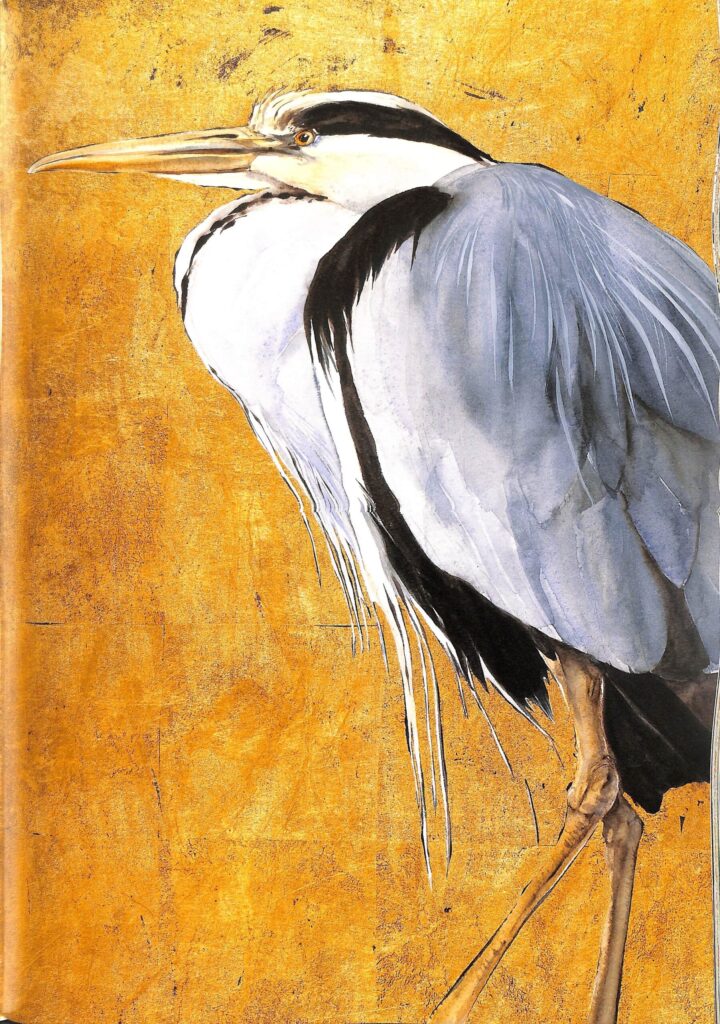
- ‘Heron’
-
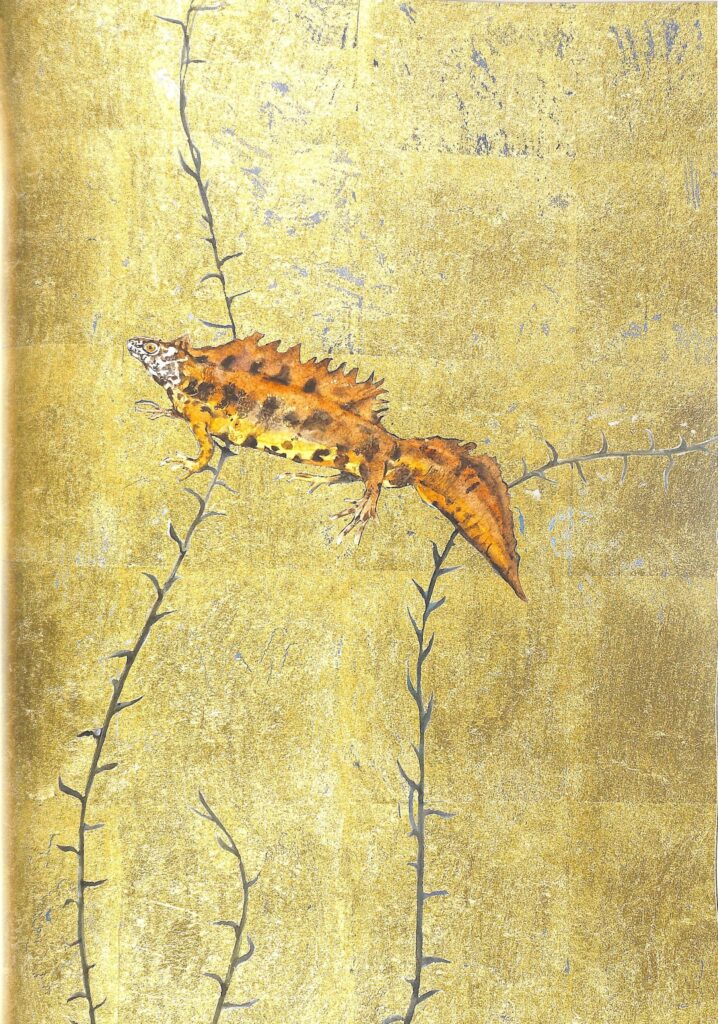
- ‘Newt’
-
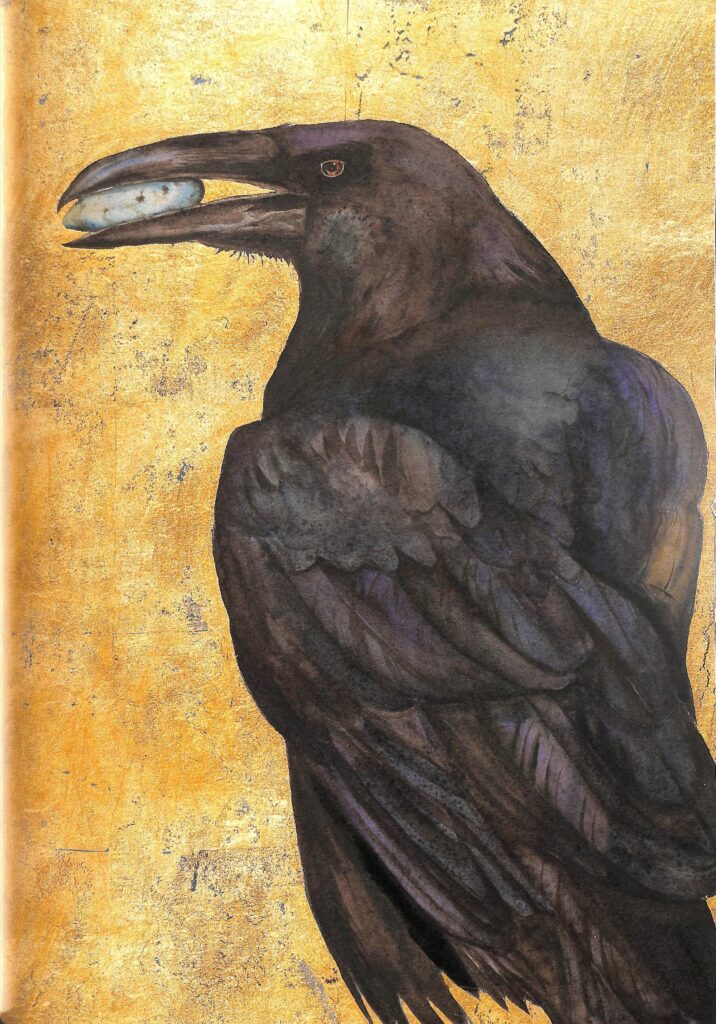
- ‘Raven’
John of Damascus would likely be appalled by icons of non-human creatures as royal priests and sacred kings. He adamantly asserts the superiority of icons of Christ and the saints in the church over the elaborate décor of the earthly Temple: ‘Are not the walls of the house of the Lord made much more valuable when adorned with the forms and images of saints, rather than animals and trees?’25 Nonetheless, even John of Damascus acknowledges the fittingness of reverence for non-human creation. While he is adamant that he only venerates Christ and the saints, he nonetheless reverences ‘the rest of matter’ since it is through matter—through material reality—that salvation has come.26
The Lost Words inspires reverence for all of material creation by presenting us with an intricate and wondrous world in which we are invited to marvel at what Gerard Manley Hopkins called the ‘thisness’ (haecceity) of each particular creature.27 We learn, for instance, about the Conker, which Cabinet-maker cannot craft, King cannot command, and Engineer cannot design.28 We follow Fern’s fronds as they unfurl.29 We witness the statuesque stillness of Heron, who ‘magically… / unstatues’ as he ‘hauls himself into flight’.30 We marvel at Starling’s murmurations, the ‘ghostly swirling surging whirling melting’ mix of ‘Northern lights’ and ‘shoaling fish’ and ‘swarming flies’ and ‘clouding ink’.31 As we marvel at the ‘thisness’ of each particular creature, we cultivate a deeper reverence for all matter, through which our salvation has come.
-
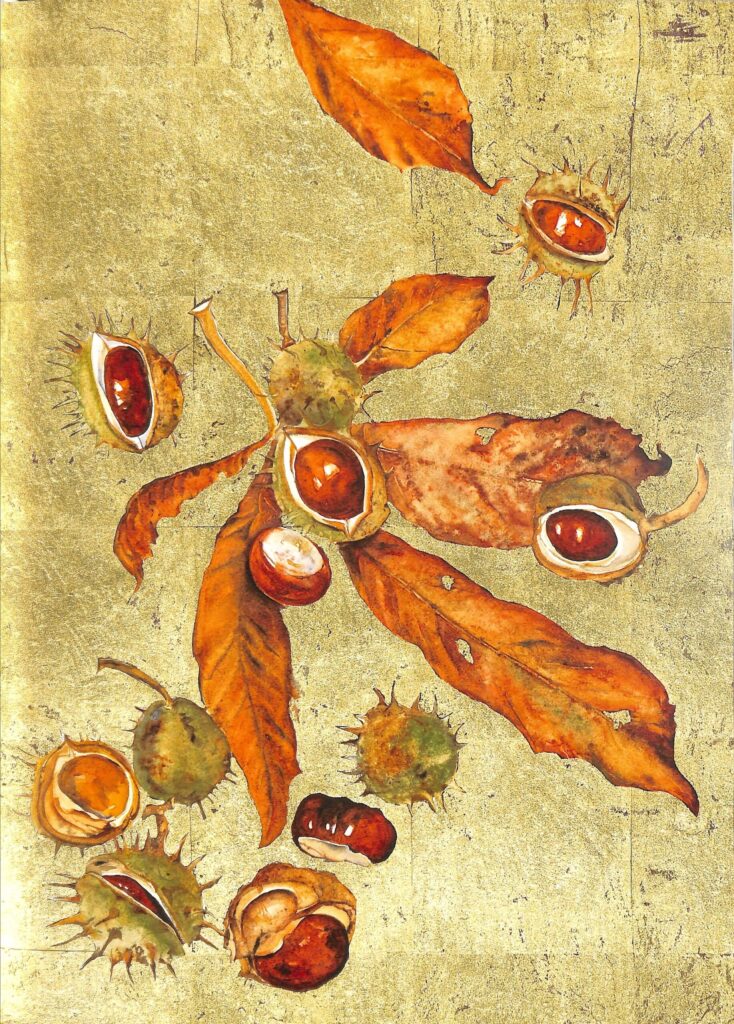
- ‘Conker’
-
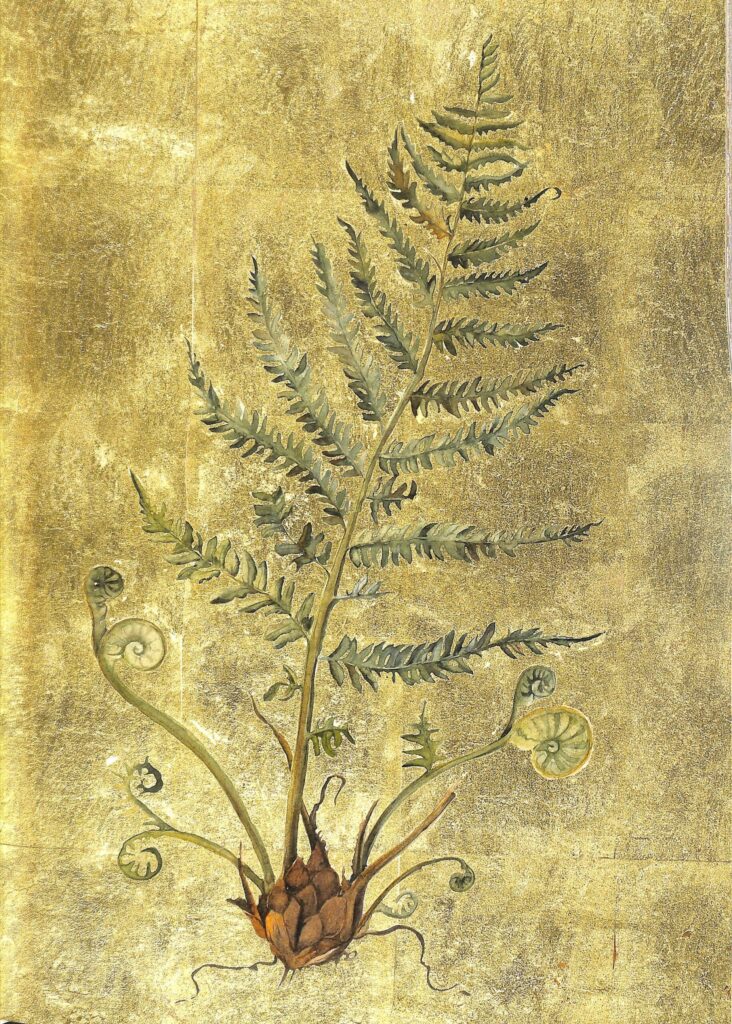
- ‘Fern’
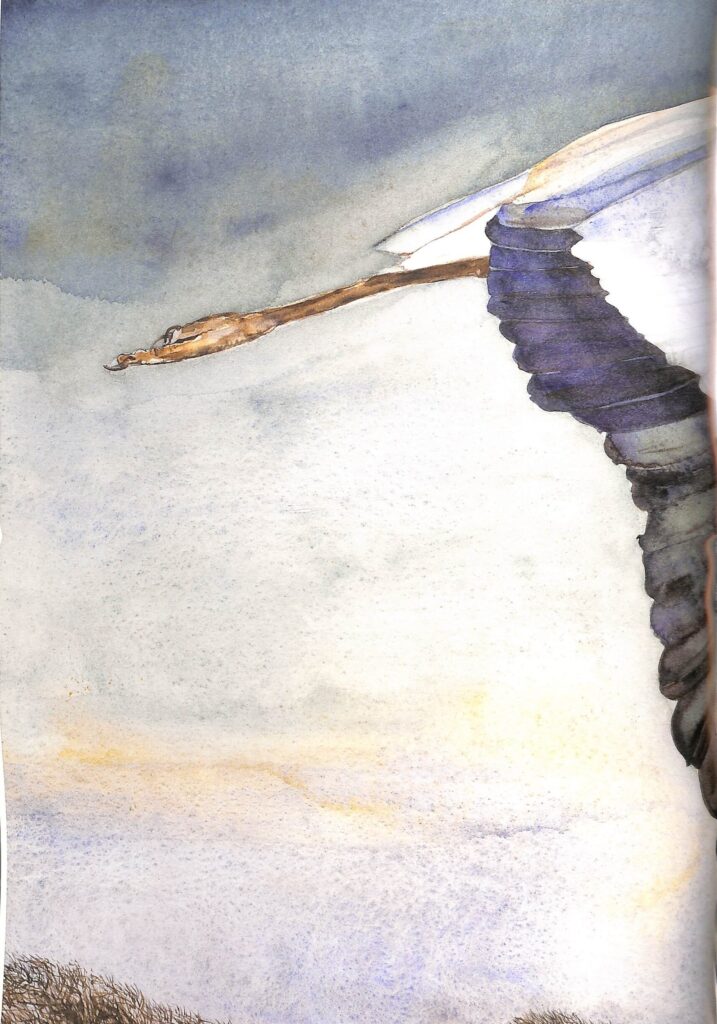
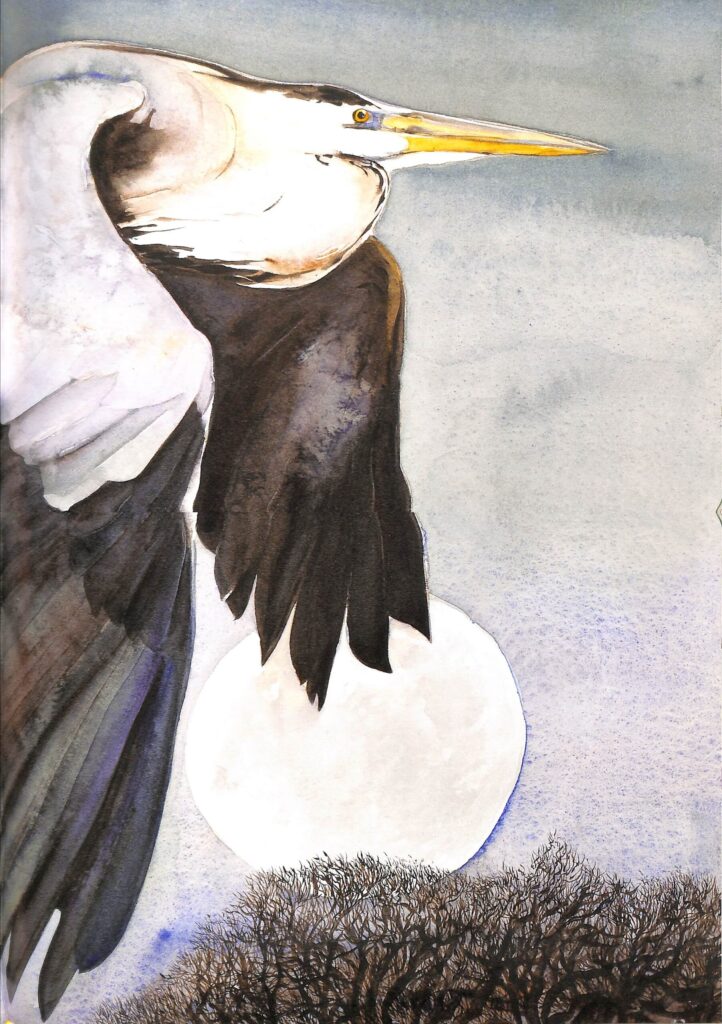
‘Heron’

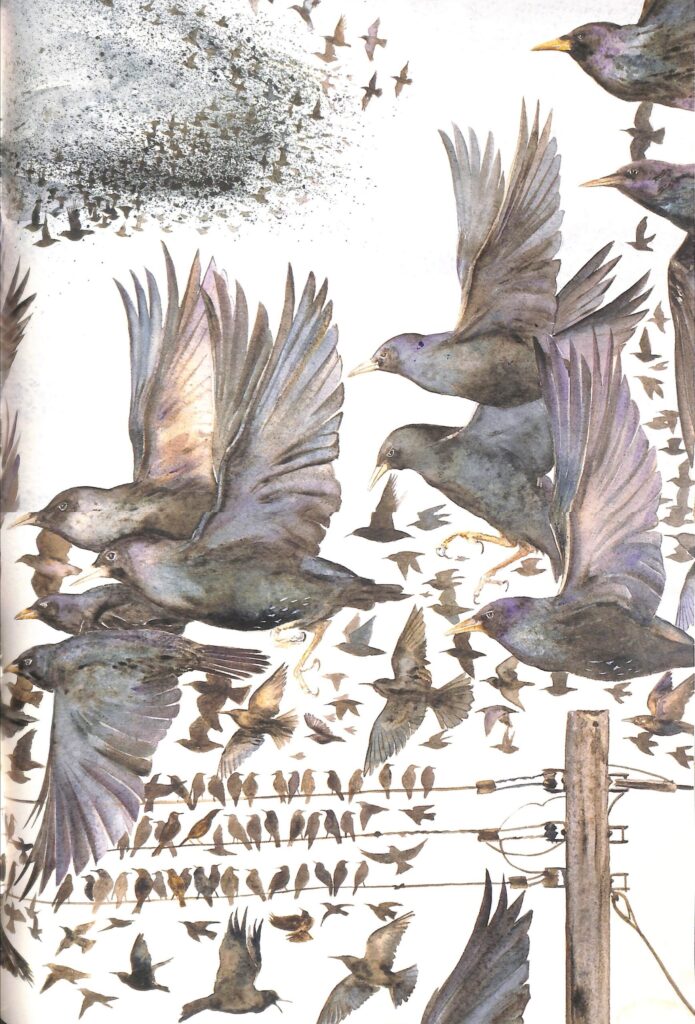
‘Starling’
Christ at Play
In the poem ‘As Kingfishers Catch Fire’, Hopkins muses, ‘Christ plays in ten thousand places, / Lovely in limbs, and lovely in eyes not his / to the Father through the features of men’s faces’. In borrowing the distinctive style of Christian iconography, The Lost Words invites us to imagine that as ‘Christ plays in ten thousand places, / Lovely in limbs, and lovely in eyes not his’, he plays also in the limbs of ferns and willows, in the eyes of adders and otters, through the features of newts’ faces.32 While the iconography of The Lost Words may not pass the test of orthodoxy, Morris employs this distinctively Christian style of illustration to call us to orthopraxy in creation care. These icons of lost creatures compel us to become engaged participants by inviting us to reverently attend to wondrous creatures in whose limbs and eyes and faces Christ Himself might play.
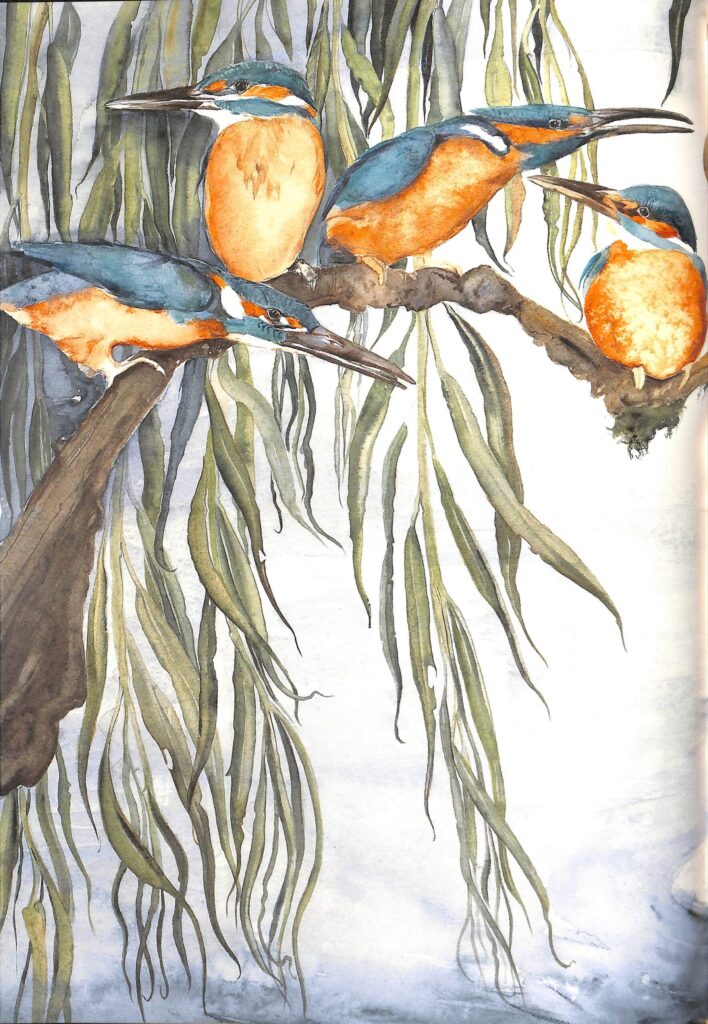
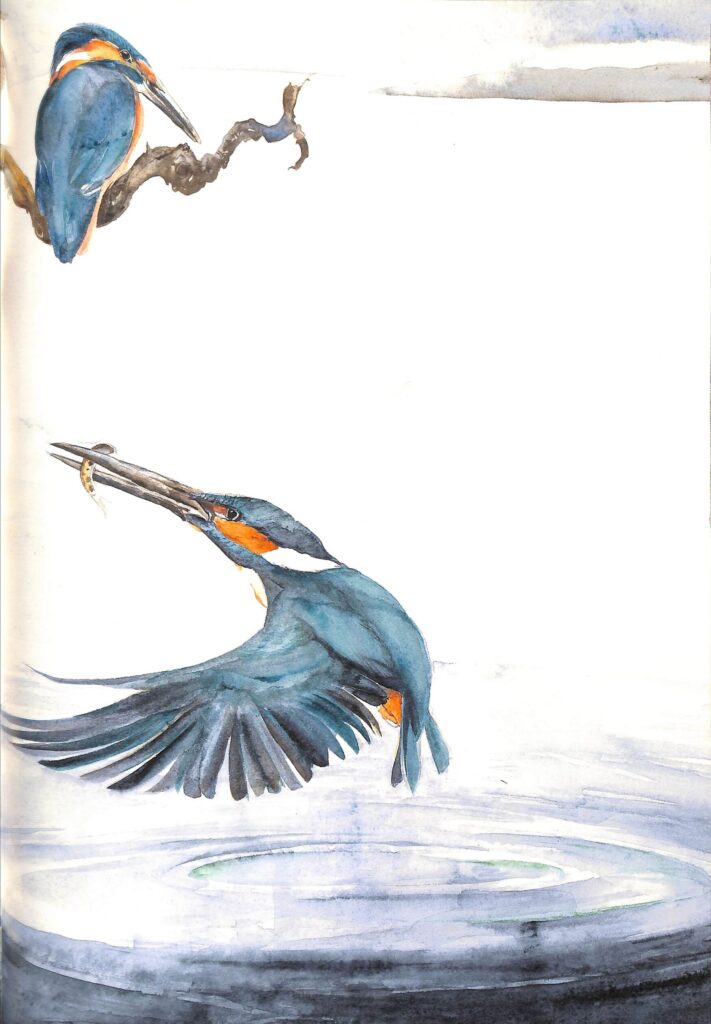
‘Kingfisher’