
The Orthodox Icon and the Abstract Art of Constantin Brancusi and Wassily Kandinsky
To kick off our autumn series on Religion from the Outside, icon writer Aidan Hart assesses the line of influence — and natural divergences…
Read More
To kick off our autumn series on Religion from the Outside, icon writer Aidan Hart assesses the line of influence — and natural divergences…
Read More
Last week, we learned that Wendell Berry had entered into fellowship with the ‘dead [that] that are alive’.1 I spent the past year reading…
Read More
An Introduction to our Autumn Series By Brendan Wolfe and Madeleine Meyer To commemorate 13,000 Soviet soldiers buried in Berlin after the city’s capture…
Read More
A World Ablaze: Reflections on Our Summer Theme In her famous epistolary novel Gilead, Marilynne Robinson’s protagonist John Ames writes in his Pentecost sermon that…
Read More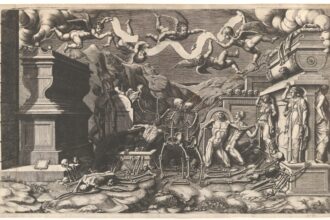
Hayyim Nachman Bialik’s ‘Be-‘ir haharegah‘ (‘In the City of Slaughter’) remains one of the most powerful literary responses to the Kishinev Pogrom. Bialik, a…
Read More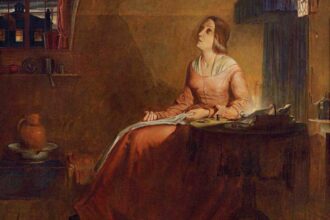
When you sow, you do not plant the body that will be, but just a seed, perhaps of wheat or of something else. But God…
Read More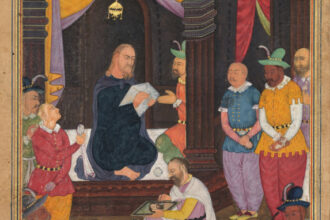
Are not these people, who are speaking in various tongues, from Galilee? How is it that each of us hears them speaking in the language to which we were…
Read More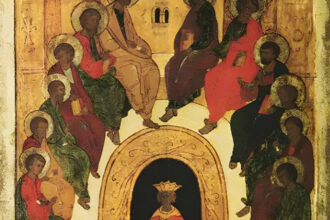
In traditional Christian iconography, Pentecost is associated with the image of tongues of flames, fire, or even doves, which signify the Holy Spirit in…
Read More
What are the roots that clutch, what branches grow Out of this stony rubbish? Son of man, You cannot say, or guess, for you…
Read More