


Picture the scene: a gospel choir in bright green and pink robes comes out onto the stage to a luxurious piano and synth vamp, and one member of the choir steps out to begin singing. ‘I believe I found the star. I believe I found the superstar,’ she tells us. Then the rest of the choir lends their voices to declare together: ‘We believe we’ve found the Super Star Sea Star who will save us all.’ Is this a reference to Jesus, or perhaps to the star that the Wise Men followed to visit him? No, the star in question here is Patrick Star, the pink starfish who lives under a rock next door to SpongeBob SquarePants in the beloved children’s cartoon of the same name. This song is ‘Super Sea Star Saviour’ from the 2017 Broadway SpongeBob SquarePants musical.1 In this number, the sardines have decided to make Patrick their new leader, as they believe he can help them avoid the volcanic eruption that is predicted to wipe out their town of Bikini Bottom. This song clearly participates in the gospel music tradition, through both its musical style, content, and accompanying costumes and choreography—despite being removed from the genre’s religious or cultural context.
This paper will examine three examples of contemporary musical theatre songs in the gospel genre that occur outside of their expected religious and cultural contexts. In these examples, the musical symbols of gospel work alongside the bodily symbols they recall to convince others of a position (‘Love Thy Neighbour’ from The Prom), express fervour for a cause (‘Run, Freedom, Run!’ from Urinetown), and convey a posture of jubilant worship (‘Super Sea Star Saviour’ from SpongeBob SquarePants: The Broadway Musical). The religious memory that the gospel genre evokes, and the participatory nature of that memory, make it a particularly efficacious genre in the medium of musical theatre for stirring up joyful emotion and rousing characters to action, even when used in a nonreligious context.
Historical Context
Gospel music is a form of African American religious music that developed in the 1930s. Characteristics of the gospel style include call-and-response structures, polyrhythm and syncopation, and ‘vamp’ sections that build to illicit a bodily response. Vocally, gospel singers utilize affections such as gospel moan, cry, gravel, grunt, and wail, oftentimes without an attempt to create consistency across vocal registers.2
Gospel shares a common history with many secular music genres also developed by Black artists throughout the late 19th and mid-20th centuries, such as ragtime, jazz, blues, and soul. In fact, the ‘Father of Gospel Music,’ Thomas Dorsey, began his musical career as a blues pianist. While they also differ in rhythm, chord structure and harmonies, and vocal range and style, what primarily separates these so-called ‘secular’ genres from the religious gospel music is their content and context. The content of gospel music is physical as well as auditory; it is a genre that demands to be moved along to and invites participation from all members of the congregation. Therefore, when musical theatre composers utilize the auditory language of the gospel genre, even in a nonreligious setting, they also gain access to its bodily symbols.
Musical theatre emerged at the turn of the 20th century from a combination of the narrative form of operetta with repurposed songs from the Tin Pan Alley.3 As the form developed, musical theatre composers began to write what are known as ‘book musicals’ with songs written specifically for the show and an integrated score and plot. Today, while there is still an identifiable ‘musical theatre sound’—characterized by catchy melodies with emotive orchestrations sung in a bright, forward tone—original musicals also exist in genres such as rock, hip-hop, country, folk, and gospel.
The gospel musical is a lesser-known subgenre in the latter half of the 20th century that delivered moralistic plots punctuated with Black gospel music to primarily Black audiences.4 This legacy is continued in contemporary shows such as Choir Boy and A Strange Loop, which draw on the tradition but complicate the relationship between the religious and cultural contexts of gospel.5 However, each of the three examples examined in this paper are the single gospel song in their respective scores in shows created for secular audiences made up of predominately white casts. While gospel music is sung today in churches made up of people of all races, its history cannot be separated from its African American roots. Therefore, when speaking of the decontextualization of gospel music within musical theatre, its separation from Black church culture is one of the ways that these examples use the genre in a manner that is ‘from the outside.’
Love Thy Neighbour
One song that uses the gospel genre in a nonreligious context is ‘Love Thy Neighbour,’ from the 2018 musical The Prom.6 This show follows four Broadway actors past their prime who, out of selfish motivations, travel to Indiana to try and convince a conservative school district to let local high schooler Emma bring her girlfriend to the prom. In this song, Trent, one of the actors, calls Emma’s classmates out on their hypocrisy by pointing out all the Old Testament laws that they do not follow. Using the gospel genre helps Trent convince the students to love their neighbour by providing a participatory framework that invokes their religious memory.
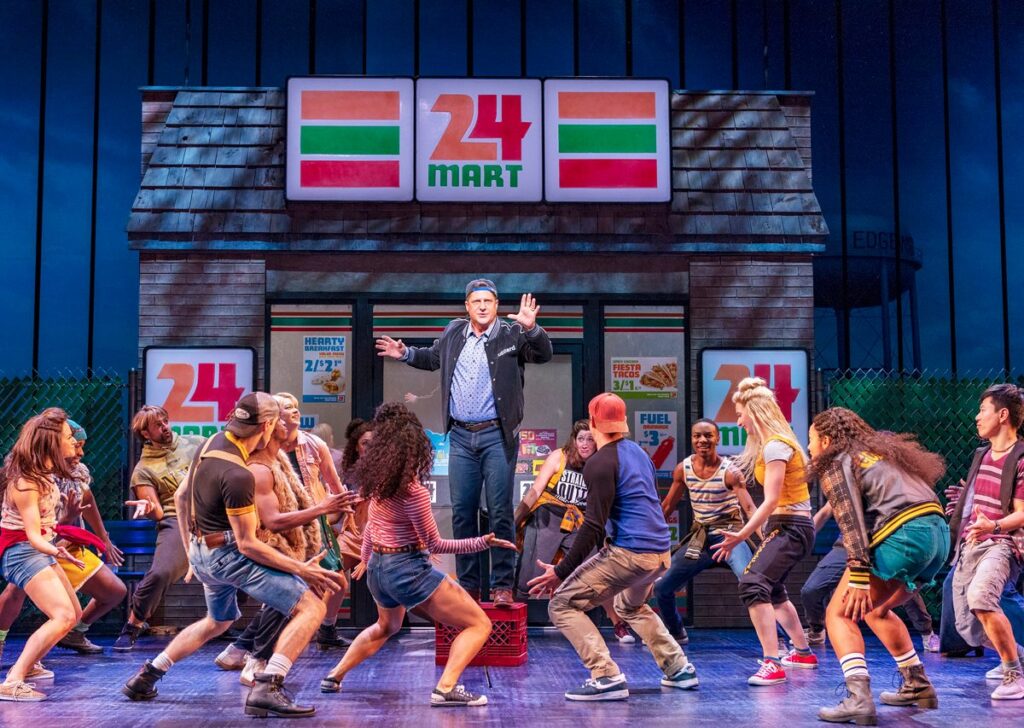
This song maintains the ‘musical theatre sound’ the most out of the examples in this paper, but it has stylistic ties to the gospel genre through its choice of instrumentation such as an organ synthesizer, horns, and tambourines. Trent approaches this genre ‘from the outside,’ as his connection to Christianity is through theatre, not through the church. As he tells the students: ‘I’ve played Jesus Christ on three separate occasions…I’ve been crucified three times…I got to know J.C. very well…’7 But the students he’s trying to convince are ‘on the inside.’ They tell him: ‘We go to church’; ‘We’re Christians’; ‘We follow the Bible.’8 Utilizing the symbols of the gospel genre calls on their religious memory, the association of which helps legitimize Trent’s use of the Bible.
At the end of the song, Trent proclaims ‘Jesus take the wheel and steer it / if you feel the Holy Spirit’ as the song breaks down into a gospel vamp: the key goes up a step and the tempo increases; the orchestra plays a syncopated rhythm as the ensemble claps along like a gospel choir.9 Developing into a gospel vamp gives the students the opportunity to, as musicologist Braxton D. Shelley argues gospel vamp does, ‘experience with their bodies what they believe in their hearts.’10 The gospel genre serves as an agent of change, giving the students a structure to join in on as they come to agree. They have assented to Trent’s belief that loving one’s neighbour transcends the Levitical laws, and now they express those beliefs physically through participating in the song.
Run, Freedom, Run!
‘Run, Freedom, Run!’ from the musical Urinetown, borrows from the structure and movements of the gospel genre to help the characters express their fervour for a cause.11 Debuting on Broadway in 2001, this satirical musical imagines a world in which a twenty-year drought has led to the outlawing of private toilets, and everyone is forced to pay to pee in the public toilets or risk being shipped off to Urinetown. In this song from the second act, Bobby Strong—who has started a revolution of townspeople—reminds his fellow rebels that they are after freedom, not revenge.
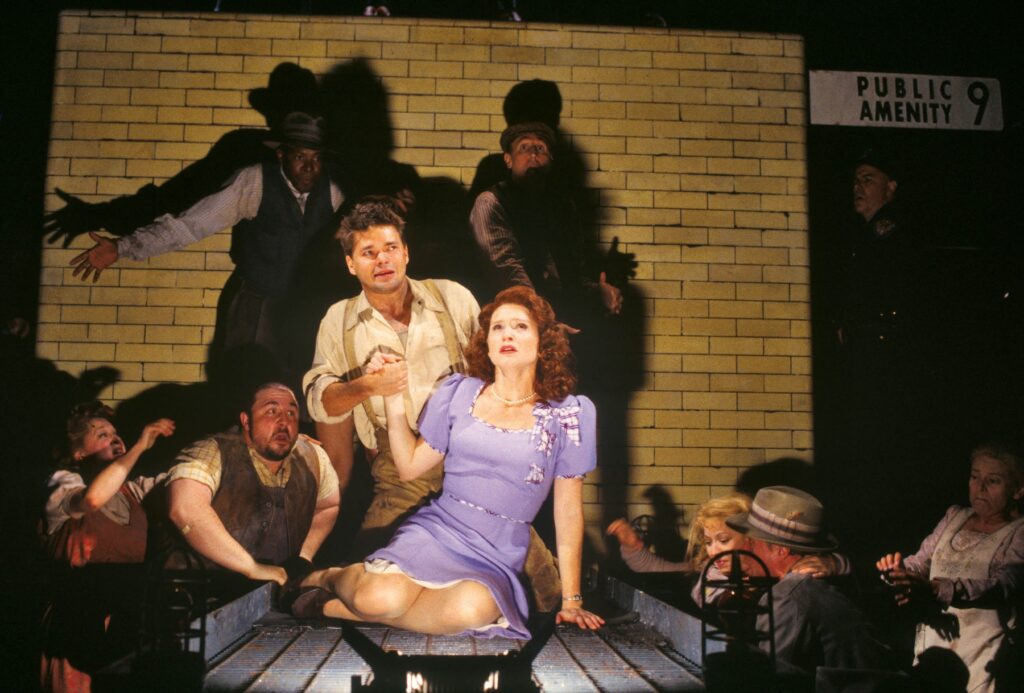
Musically, this song follows the call-and-response structure of many gospel songs, which gives others the chance to join in to show they agree and provides the scaffolding for Bobby Strong to lead the charge for his cause. The townspeople primarily sing the words ‘run, freedom, run’ or ‘freedom runaway’, as well as repeating lines that Bobby calls out. These roles of ‘leader’ and ‘follower’ are further emphasized in the break, in which Bobby conducts the townspeople in a choir, directing each vocal part to sing out one at a time.
After the break, the song escalates into a vamp, which creates a religious frenzy among Bobby’s followers. Musical theatre fans may recognize that the chair choreography pulls visually from ‘Sit Down, You’re Rocking the Boat,’ another gospel-inspired song from the 1950 musical Guys and Dolls. Both numbers utilize the bodily symbols of praise hands and foot stomping, like in a ‘shout.’12 The choreography gets increasingly frenetic as the chorus exclaims ‘hallelujah.’13 Finally, Bobby declaims ‘freedom’ as a woman is slain in the spirit and falls to the ground with a touch from his hand. With this, the use of religious symbols in ‘Run, Freedom, Run!’ suggests that Bobby’s message of freedom has power akin to that of the Holy Spirit. The use of the gospel genre in this song helps lead the audience to conclude that Bobby’s call for freedom from an oppressive government is not just political, but religious. But, as it sits within a satirical musical, the use of the gospel genre still feels a bit ‘put on,’ and the exaggerated response could be interpreted as performative rather than a natural outpouring of their fervour.
Super Sea Star Savior
Finally, let us return to the example we started with: ‘Super Sea Star Saviour’ from SpongeBob SquarePants: The Broadway Musical.14 If ‘Love Thy Neighbour’ used religious symbols to prove a point, and ‘Run, Freedom, Run!’ stirred up religious fervour for a nonreligious cause, ‘Super Sea Star Saviour’ utilizes the symbols of the gospel genre for an explicitly religious purpose: just one that worships Patrick Star instead of Jesus Christ.
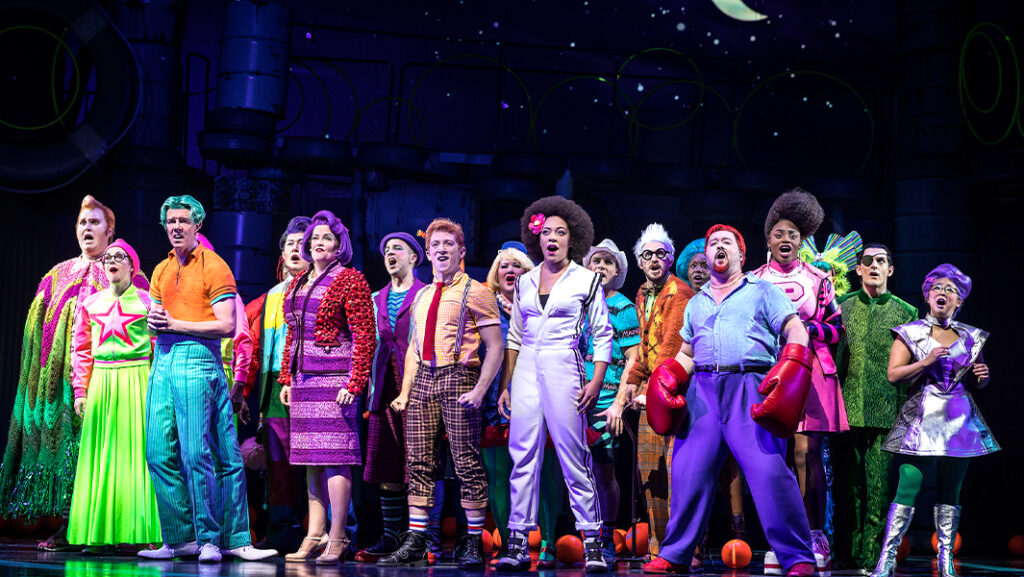
Featuring an original plot, the score of this musical is made up of music from a wide variety of genres written by artists from that genre. ‘Super Sea Star Saviour’ is by gospel recording artist Yolanda Adams. Being written by someone ‘from the inside’, this song utilizes the symbols of the gospel genre the most authentically out of the three examples. Unlike the feeling of being overexaggerated for the sake of humour like we get in Urinetown, the ecstatic response of the sardines feels genuine, as it pours out of their joy in worshipping Patrick.
Using symbols with such religious resonances helps the audience correctly identify that what is happening onstage is indeed worship, as the sardines declare that Patrick is their saviour. The sardines are dressed in flowy skirts that mimic the movements of choir robes during the dance, with headwear akin to a mitre.15 The choreography begins as subdued synchronized prayer-hand movements but into a frenetic praise break as they proclaim that they should ‘shout it out’ and tell everyone the news of their new saviour. Over the course of this five-and-a-half-minute long number, the sardines genuflect and bow; they twirl and shout; Patrick leads a call-and-response tambourine dance break, and one sardine is slain in the spirit. But while similar symbols had an air of performativity in ‘Run, Freedom Run!’ here the sardine’s behaviour feels genuine, as the SpongeBob musical grounds itself in the characters’ lived reality, even while the circumstances may seem outlandish to the audience. At first, Patrick is confused by the attention, as the sardines call him ‘the answer to our prayer’ and ‘the one who will save us from our demise.’ But he quickly starts to enjoy the attention, uses his power to ask someone to ‘bake me a ginormous cake” and personalizes the names the sardines have given him of ‘Great One, Grand One, Guru, one we can turn to,’ agreeing with their assertions. Patrick too gets caught up in the frenzy of their worship as he tells them, ‘I feel it, my brothers and sisters.’ By this point, the audience will also likely be ‘feeling it,’ and may themselves feel inclined to participate bodily through clapping their hands or dancing in their seat. Through the language of the gospel genre, the Palace Theatre is temporarily transformed into a church as it becomes a place of worship.
Conclusion
The use of the symbols of the gospel genre in these examples and more help the characters in these musicals to embody ecstatic joy, convey a change in belief, and defend a position. The inherently physical and participatory nature of the gospel genre gives the ensemble the opportunity to express what they already believe or to arrive to new belief throughout the song. And the escalation of the gospel vamp takes the already exaggerated art form of musical theatre to new heights, as it stirs up frenzy and encourages a bodily response.
And the religious resonances of these symbols invoke an association with religion to give authority to the words spoken, suggest greater power or significance, and express a posture of worship. The fact that gospel music is a religious genre is crucial to its use within the musical theatre canon. It is not being used as a ‘secular’ genre. Characters refer to and are slain in the spirit. They shout ‘hallelujah’ and lift their hands in praise. The gospel genre offers musical theatre composers a mode of expression that they don’t have access to via other genres: namely, an ecstatic one with religious resonances. By utilizing the gospel genre out of context, musical theatre composers can give both their characters and audiences a framework on which to hang their experiences and name them as religious.
Citations:
