
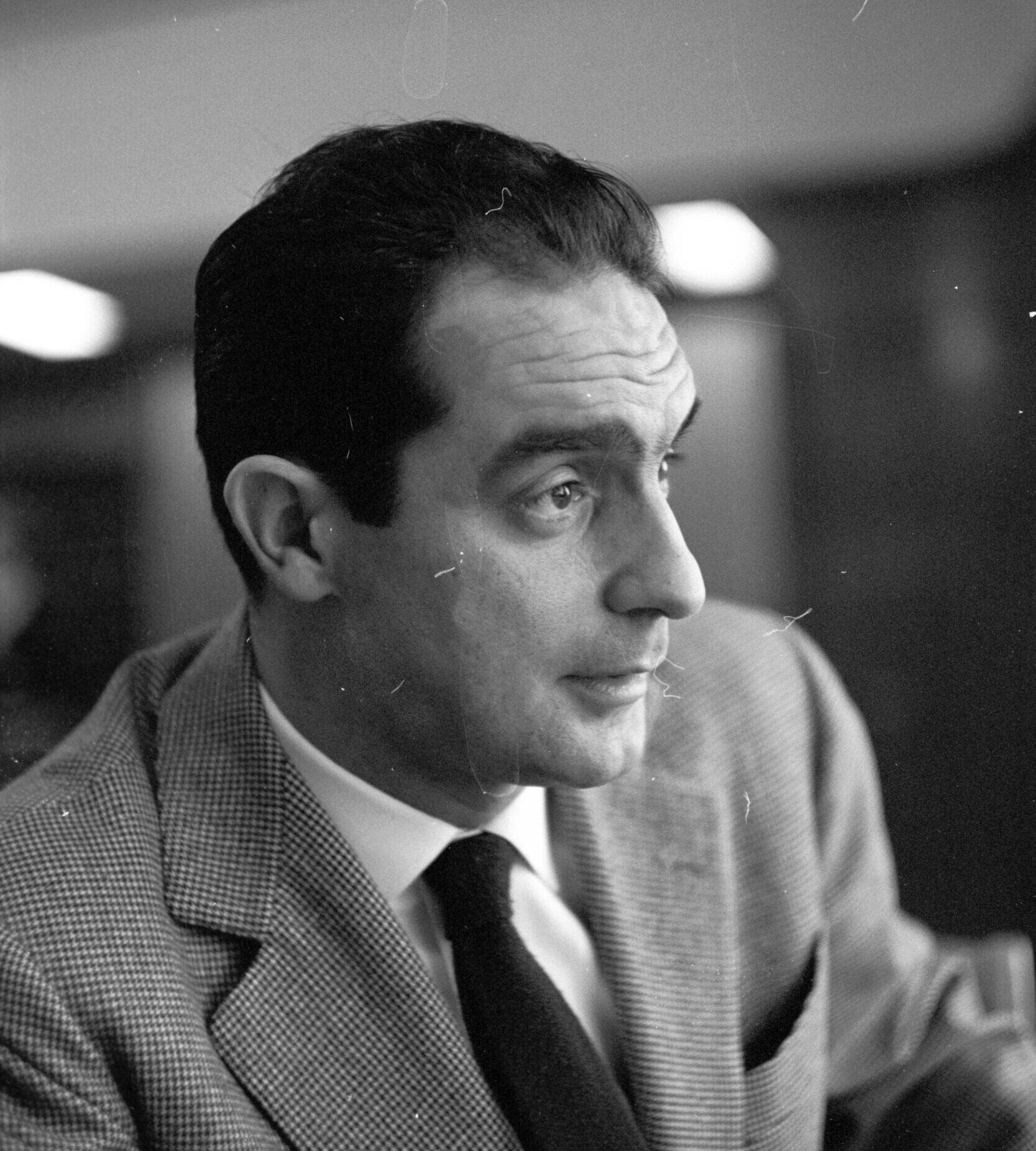

In an editorial for Esquire in 1985, the same year Italian writer Italo Calvino (1923-1985) died, the American novelist John Updike said of fiction that it is ‘nothing less than the subtlest instrument for self-examination and self-display that mankind has invented yet’.1 Fiction tells us who we are and what we are like; represents or even re-presents who we were and what we have been; and suggests, in its more speculative forms, what we will become and what we will be like. Novels, at the most basic level, stage the consequences of actions and operate (at least notionally) according to a unifying, unseen plan that it is in the gift of the author to make clear as the narrative progresses.2
In the preface to the texts of the incomplete Charles Eliot Norton lectures that Italo Calvino was due to give at Harvard in 1985-86, he invokes a faith in the future of literature in the new millennium that is based upon the things that he believed literature alone could do: ‘My confidence in the future of literature consists in the knowledge that there are things only literature can give us, by means specific to it’.3 Among twentieth-century Italian writers, perhaps none was more preoccupied with what literature does, and how it does it, than Calvino. Like pretty much everyone else in post-war Italy, he started as a writer of neorealist fiction that reflected the dismal economic and moral condition of Italy during and after the war.4 However, following his initial success as a realist writer with The Path to the Spiders’ Nests (1947), Calvino moved quickly into non-realist forms that were better suited, he thought, to exploring the ills of his age and the role that literature might have to play in exposing and remedying them. He started writing allegorical fairytales in the 1950s, and then was a swift adopter of postmodern narrative conventions throughout the 60s and 70s. Calvino’s formal experimentation—no two of his texts are entirely alike—is the hallmark of a life-long interest in the power of literature to create and uncreate worlds: our own, those of the past, and those to come. In his mid-late career, he began to reflect intensely on the function of literature in twentieth-century society, where he perceived certain key psychological and technological shifts to have taken hold and felt authentic human consciousness to be under threat of dissolution. At the same time, his fictional texts moved increasingly toward absurd or fantastic forms and metafictional approaches that question what it is for characters to be whole, how readers expect literary lives to take shape, and how textual worlds come into being or end.
The things that Calvino attributed to literature, that produced his faith in the literary future, and that became his primary narrative preoccupations, are, in some cases, things already given to us by theology as a particular form of narrative, or indeed perhaps the form of narrative, if we are to follow Catherine Pickstock.5 Calvino’s upbringing was secular and anti-clerical, a position to which he remained committed throughout his life. His parents were pacifists, Marxists, and antifascists, and withdrew their children from all forms of religious education. In later life, Calvino described himself as ‘tolerant of others’ opinions, particularly in the field of religion, remembering how irksome it was to hear myself mocked because I did not follow the majority’s beliefs’.6 Yet, at the same time, Calvino’s deliberate troubling of literary ontologies can be mapped onto a series of concerns that have clear theological dimensions, namely: wholeness, fulfilment or completion, and creation and un-creation (beginnings and endings). Holding in tension Calvino’s personal atheism and what Richard Grigg has called the ‘fertile ground for theological speculation’7 that his works provide, narrative itself becomes a form of idiosyncratic atheist God-talk: a complete system that brings things into being, bestows or withholds wholeness, shapes the world now, and anticipates worlds to come.
Our Ancestors
The preoccupation with narrative’s potential to create and uncreate worlds can be traced from the early phase of Calvino’s career as a non-realist writer, starting in the 1950s. As John Milbank says in an essay on the theological and narrative import of the gift in children’s fantasy, particular forms of literature rely upon ‘the association of erstwhile Christian realities with other worlds, lost worlds, or past worlds’.8 Similarly, Terry Eagleton has claimed that many secular narratives contain suppressed or displaced forms of God-talk, since ‘most aesthetic ideas (creation, inspiration, unity, autonomy, symbol, epiphany and so on) are really displaced fragments of theology’.9 In the mid-century, Calvino wrote a series of three novels that relied on fantastical and displaced historical settings in order to critique the discontents of contemporary Italian and European society and explore the question of unity within a person. The Cloven Viscount (1952), The Baron in the Trees (1957), and The Nonexistent Knight (1959) revolve around the exploration of a central image: the divided man, the man who lives in the trees, and the man who does not exist. In the first, the Viscount Medardo of Terralba is unfortunate enough to be bisected by a Turkish cannonball on the plains of Bohemia whilst heading to join the Christian army in the Turkish wars of the seventeenth century. He miraculously lives on in the form of two perfectly stitched up halves, one entirely good and one entirely bad. The Good and Bad Viscounts engage in various escapades, and eventually fall in love with the same woman, Pamela, a nod to Calvino’s affection for the history of the novel form. As Calvino put it in his preface to the republication of the trilogy under the title Our Ancestors in 1960, the themes of the Viscount are those of ‘incompleteness, bias, the lack of human fullness’.10 Calvino scholar Martin McLaughlin, speaking of the trilogy as a whole, has likewise defined their central preoccupation as the search for wholeness and integration.11
Calvino’s collective title for the three moral tales is particularly significant. These are, their author says, our ancestors, and in their stories we find ‘a family tree for contemporary man’.12 The three types of fallen or incomplete humanity incarnated in the Viscount, the Baron, and the Knight are Calvino’s version of what Dante in the Purgatorio, as the Pilgrim gazes up Mount Purgatory towards the Earthly Paradise, called ‘la prima gente’ (Purg. I, 24): the first people whose story and whose conduct explains how we got to where we are now. Calvino’s ancestor stories function as cautionary or revelatory tales, and their conclusions toy with the possibility of restoration to wholeness from a fallen condition produced by two decades of Fascism and the pollution of the human spirit that Calvino believed had been evidenced by the failures of Communism in Europe and had accompanied Italy’s rapid entrance into capitalist modernity in the 1950s. Despite these political underpinnings, Calvino is careful to specify that in the case of each ancestor ‘[t]he tale is born from the image, not from any thesis which I wanted to demonstrate, and the image is developed in a story according to its own internal logic’.13 In other words, it is the starting narrative image of the cloven man that dictates the progression towards wholeness and reintegration, and it is a narrative conclusion, the end of the story, that ultimately performs the necessary work of knitting back together.
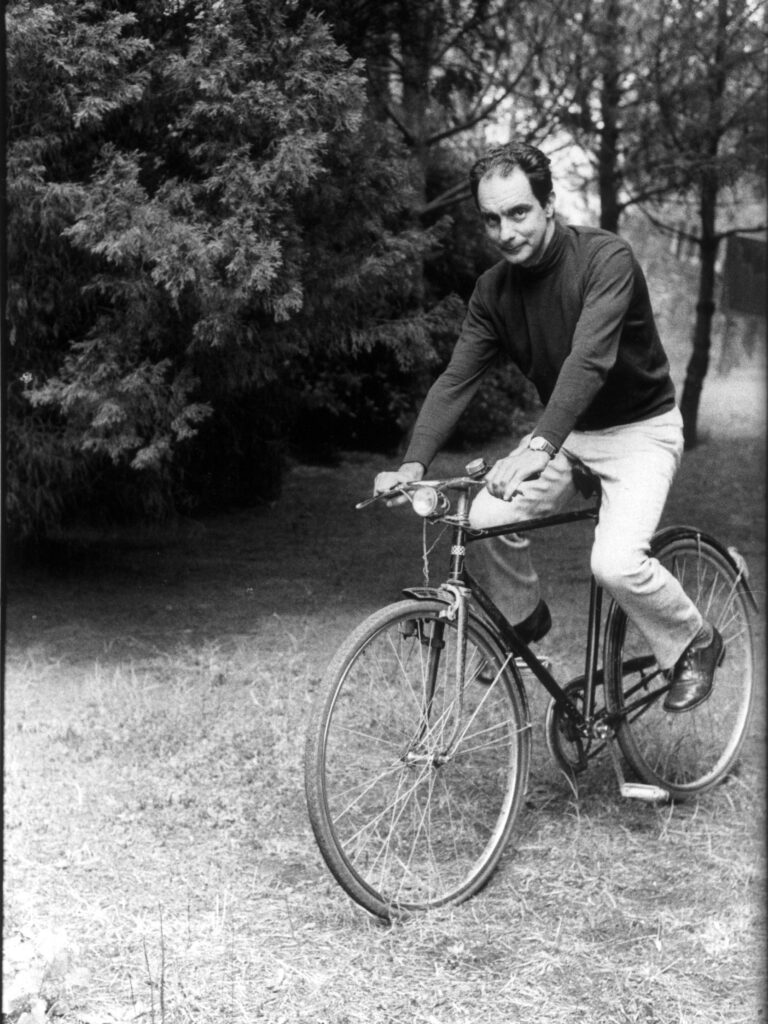
In the novel’s final chapter, narrative’s role in bringing about the reunification of Man is rendered clear. The two Viscounts, Good and Bad, have come to blows over their mutual desire to be married to Pamela, and engage in a dual which results in the death and rebirth of both as one whole man. At the conclusion of the fight, both are fatally wounded, for ‘the lunges of both had burst all their vein-ends and reopened the wound which had divided them in two. Now they lay face to face, and the blood which had once been one man’s alone was now again mingling in the field’.14 The doctor, seeing that the ‘old wound’ has burst and the two bodies can now be united once more, exclaims ‘He’s saved, he’s saved! Leave it all to me’.15 When the recomposition has been completed, the Viscount’s lopsided and deformed features gradually appear symmetrical again. At the moment of reintegration, it is the doctor and the Viscount’s wife, Pamela, whose reactions are the most theologically revealing: Dr Trelawney exclaims, ‘Now he’s healed’, whilst Pamela describes herself as having a husband who is at last complete.16
Clearly here we have themes of redemption, salvation, and integration. The narrative’s close heals the central image of the divided man by restoring to him his true body and his whole self, through the sacrificial pouring out of each half’s blood and the closing of the old wound of his physical divorce from his full and undivided self. In the mutual destruction of the two half men, whose partial bodies and selves are ‘alive but cloven’ for the bulk of the story, the Viscount is remade as a person with ‘everything complete’.17 The old man, or men, have died; the new man is alive and ready to experience the fullness of life. Indeed, his nephew the narrator tells us, ‘He had a happy life, many children, and a just rule’.18 The narrative, propelled by the self-sacrifice of the two viscounts and the salvific intervention of the doctor, is now fulfilled and its ending does the God-work of remaking and restoring. Yet this does not open onto the renewing of the whole world and of all people that the Christian narrative of restoration anticipates. Calvino could not take that story to be true, and the narrator of the Viscount’s own lingering divided condition at his narrative’s close reveals this sharply:
So my uncle Medardo became a whole man again, neither good nor bad, but a mixture of goodness and badness, that is apparently not dissimilar to what he had been before the halving. […] Some might expect that with the Viscount entire again a period of marvellous happiness would open; but obviously a whole Viscount is not enough to make the whole world whole. […] Amid all this fervour of wholeness I felt myself growing sadder and more deficient.19
In the last page of the text, the Healer or Unifier, in the form of the medical doctor—he who has forged the New Man from the two halves of the Old—departs to a land where the narrator, who feels himself to be ever more diminished, cannot follow. In one of the trilogy’s playful historical cameos, Captain James Cook sails to Terralba and Dr Trelawney is persuaded to join the explorers on their expedition to the New World. The narrator, however, is stranded in the old one, and his own old wound remains stubbornly unhealed. The novel’s closing line emphasises an ongoing condition of exile that is left open: the doctor does not hear the narrator’s frantic cries to be allowed to join him, and he tells us that ‘I was left behind, in this world of ours full of responsibilities and will-o’-the-wisp’.20 In the Ancestors trilogy, Calvino starts to do what will later become a defining characteristic of his fiction: this is the beginning of what Massimo Riva has called ‘Calvino’s art of concluding without closing’.21
Worlds Without End
Literature envisages modes of being in, representing, and understanding the world, and asks what it might mean to live toward particular ends and imagine particular worlds to come. In what respects, then, can the foregrounding of the novel’s novel-ness, which became the hallmark of Calvino’s later works, be seen as a form of secularised God-talk? Calvino’s worlds without end, which include the will-o’-the-wisp world of the Viscount and most especially the postmodern labyrinths of the novels that followed in the 60s and 70s, use the practice of reading and engaging with the creation and destruction of imagined worlds to ask the same questions about teleology, fulfilment, and final purpose that theology poses, though without providing the same responses.
If on a Winter’s Night a Traveller (1979) is a novel whose entire purpose is to reflect on what novels are. The main character, who is simply called Reader and is a partial stand-in for the extradiegetic reader holding the book, finishes the quest for the full text of the novel that he has been trying to read for the entire story in a library. There he meets several other readers who reveal to him aspects of the power of literature that hold latent theological significance. The second of the seven readers in the group declares ‘My reading has no end’, situating the engagement with the book-object as an eternal engagement that is always being renewed and always shedding new light on self-interpretation and the world.22 For the fifth reader, on the other hand,
All the books I read are leading to a single book […], but it is a book remote in time, which barely surfaces from my memories. There is a story that for me comes before all other stories and of which all the stories I read seem to carry an echo, immediately lost. In my readings I do nothing but seek that book read in my childhood, but what I remember of it is too little to enable me to find it again.23
In other words, all forms of reading lead back to some originary process of reading, some prelapsarian collective story from which all possible readings are drawn —to the Ancestors, perhaps, and the stories of their fall and reintegration. The sixth reader in the group is the one that reads most explicitly by a kind of faith: ‘At times,’ they say, ‘a title is enough to kindle in me the desire for a book that perhaps does not exist. […] In other words: if you need little to set the imagination going, I require even less: the promise of reading is enough’.24 Finally, the protagonist Reader, whose desire for the completed story has been repeatedly thwarted throughout the text, is the reader whose desire for narrative fulfilment is strongest: ‘I like books to be read from beginning to end’.25 However, he clarifies, the completed text seems not to exist here and now (he has looked for it ten times and not found it), and so it must be sought elsewhere, just as the Viscount’s narrator cannot be part of the new story, yet to be written and existing in the world beyond the world-text, that the departure of Captain Cook’s ship signifies. ‘For a while now,’ says Reader, ‘everything has been going wrong for me: it seems to me that in the world there now exist only stories that remain suspended or get lost along the way’.26 Calvino never fully resolves that suspension just as he never writes a story that allows for universal completion in the Christian sense; his atheist postmodernist sensibilities forbid it. Nevertheless, what we find in these novels emerging from the tumult of twentieth-century Italy is a form of narrative engagement with theological questions about beginnings, endings, and fullness that operates unconsciously and entirely outside of the frame—that operates, more specifically, precisely through and in the one form of faith the atheist novel can profess, namely: ‘the faith in story itself’.27
