In the days leading up to the American holiday of Thanksgiving, the crew here at Transpositions are going to reflect on various ways that works of art can be a form of giving thanks. All art making, at a very fundamental level, revels in and draws attention to the ‘givenness’ of its materials, and so reminds us that gratitude is the human being’s basic response to the world. Happy Thanksgiving!
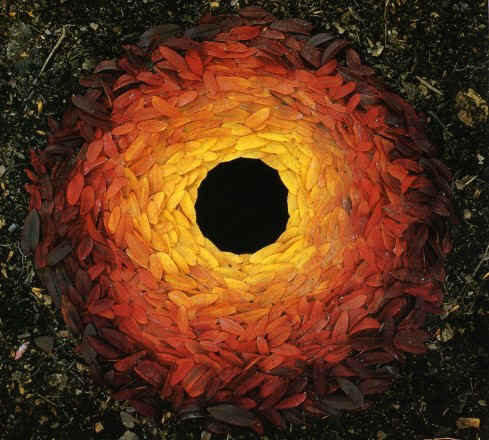
I have an art that teaches me very important things about nature, my nature, the land and my relationship to it. I don’t mean that I learn in an academic sense; like getting a book and learning the names of plants, but something through which I try to understand the processes of growth and decay, of life in nature. Although it is often a practical and physical art, it is also an intensely spiritual affair that I have with nature: a relationship.
Goldsworthy’s creative practice is an act of discovery, but this is qualified by the statement that he is not trying to “learn in an academic sense.” Instead, Goldsworthy’s exploration of the landscape takes place within the intimacy of a committed relationship. He chooses to fully immerse himself in the physical terrain, and thereby gather a kind of “working” knowledge of the world as a whole. See more of Andy’s work at his digital archive.
Goldsworthy’s creative practice reminds us that knowing our world involves both knowing it as it is, and knowing it as it is supposed to be. While his work reminds us of the importance of immersing ourselves in the world as it is, it also points towards the world in its fullness or fulfillment. In showing us the world in its abundance, Goldsworthy’s creative practice might be said to be a form of giving thanks for the riches of the present world, and for the abundance of the world that is to come.
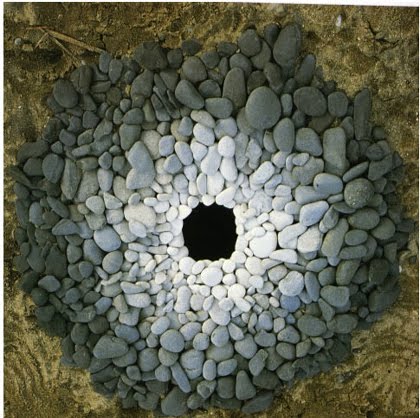
Image credits: edge of the plank and naturalismo


very special