
Jim Watkins

Jim Watkins is the assistant editor and a regular contributor at Transpositions. Originally, Jim is from southern California and southeastern Texas, but sometimes he feels most at home in the landscape and coffee shops of the Pacific Northwest. He met his wife Emily at Wheaton College in Illinois, where he studied Studio Art (concentration in painting). For his PhD research, he is examining the relationship between divine and human creativity from the perspective of divine kenosis.

Teaching Theology to the Imagination

Author’s Note: This is my final post for Transpositions as a regular contributor. I have immensely enjoyed being a part of Transpositions since its inception in 2010. As a scholar and a writer, I am deeply grateful for the interactions…


Review: Echoes of Eden

Jerram Barrs. Echoes of Eden: Reflections on Christianity, Literature and the Arts. Wheaton, IL: Crossway, 2013, 194 pp., £11.99 paper. Jerram Barrs has written an accessible and enjoyable introduction to some of the questions and issues that arise when Christians…

Redeeming the Identity of the Creative Person

Editor’s Note: This is the second post in a two-part series.  The first, titled “The Invention of the Creative Person,” suggested that the identity of the creative person is, to some extent, a cultural construct.  As with all of the…

The Invention of the Creative Person

“Human creativity is the ultimate economic resource.”[1]  Is it really?  “The first step in winning the future is encouraging American innovation … What we can do — what America does better than anyone else — is spark the creativity and…

Is The Maker Movement Making Souls?

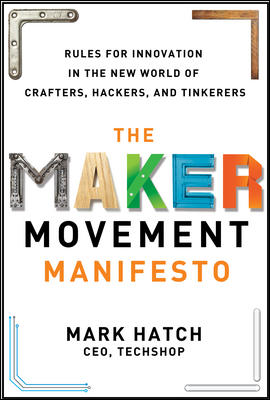
Have you heard of the Maker Movement?   I recently picked up a book titled The Maker Movement Manifesto (McGraw Hill, 2014).  In this book, Mark Hatch, CEO of TechShop, argues that a Robin Hood-like revolution is underway in the…

Copyright Law and the Art of Becoming Human

It is not uncommon to hear theologians speak of a “relational turn” in our thinking about personhood.  The idea, it seems to me, is that 20th century thinking about personhood shifts away from an individualistic understanding of the person as…

The God Who Is Visible

Lets begin with one of the world’s greatest understatements: the incarnation has profound implications for the Christian faith.  We could, of course, say this more forcefully.  Without the incarnation, would there even be a Christian faith? The Christian faith centers…